UMD Biochemistry Ph.D. Students Explore the Depths of the Microbiome
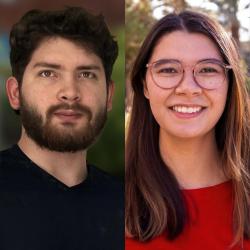
Saúl Flores and Holly Hemesath are immersed in the University of Maryland Center of Excellence in Microbiome Sciences’ seven-month student fellowship program.
The human body is home to trillions of microbes—from bacteria, fungi and viruses to parasites and other organisms—collectively known as the microbiome.
At the University of Maryland, researchers studying how these microbial communities shape human, animal and environmental health unite in the Center of Excellence in Microbiome Sciences. Funded through a UMD Grand Challenges 1.0 grant, the center advances research, education and collaboration aimed at developing science-based solutions for a more sustainable world.
“The microbiome is foundational; it underlies some of our biggest human challenges from food safety to climate change to human disease,” said Gabi Steinbach, an associate research scientist in the Department of Biology. “But it hasn’t gotten the attention it deserves.”
The center’s Student Fellowship Program, led by Steinbach, provides an award for seven graduate students from across campus to engage in discussion and training on how to utilize microbial systems across scales to translate scientific principles into transformative action. This summer, biochemistry Ph.D. students Saúl Flores (B.S. ’22, biological sciences and biochemistry) and Holly Hemesath joined the seven-month program, now in its second year.
“Both are passionate and engaged, each bringing exceptional strengths and a crucial natural science perspective to the table,” Steinbach said. “Ultimately, we want these students to think about how their research fits into the bigger picture, how it relates to society, public policy and goals, and to other fields of research. Kind of like understanding the microbiome itself, it’s crucial for them to see how the pieces fit together.”
Saúl Flores
Growing up on his grandmother’s farm in El Salvador, Flores was happiest playing with the chickens and cows or lifting rocks to see what lived beneath.
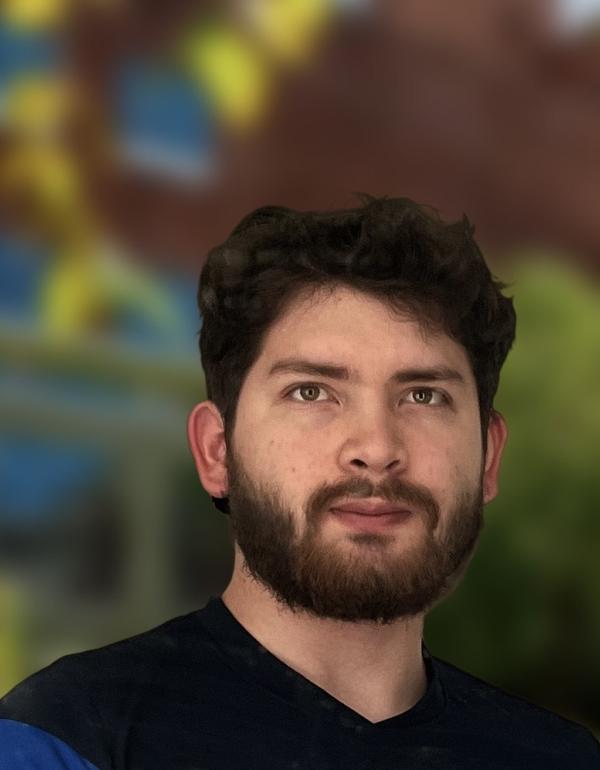
“I was a very curious kid,” he recalled.
His path in science began to take shape as a high school student in Maryland, when he interned at the National Institutes of Health.
“I was working with an investigator on pediatric brain tumor cells, and it struck me that these cells had lived on, proliferated, after the child passed away,” Flores said. “That made me want to dig deeper, to understand disease on the molecular level. Researchers may know what proteins are involved in a disease, but not necessarily how they look and function. That’s what motivated me.”
Now, working with his Ph.D. advisor, Chemistry and Biochemistry Associate Professor Myles Poulin, Flores studies biofilms—structured communities of microorganisms wrapped in a self-made protective layer and attached to a surface, like dental plaque on teeth.
Biofilms can help cells resist antibiotics, disinfectants and the body's immune system. They can also be beneficial, such as when they support plant roots.
“These biofilms that bacteria form are incredibly diverse in their architecture and components, with so many possible pathways that working on them is like doing a huge puzzle,” Flores said. “Because they can resist antibiotics, they’re a major problem in clinical settings. We are designing probes to detect them and studying proteins that can help break down their protective matrix. It’s perfect work for me because I’m very interested in structure and mechanism.”
For Flores, one of the fellowship’s greatest benefits has been learning from the other students in the program.
“I’ve really enjoyed hearing about other people’s work and finding out where it intersects with mine,” he said. “We’re coming in from different disciplines, but we share the same goal of pushing science forward and improving human health.”
Holly Hemesath
Two experiences sparked Hemesath’s interest in biochemistry: a high school psychology class that introduced her to the brain chemistry of emotions and an internship at a cosmetics company, where she tinkered with chemical formulations.
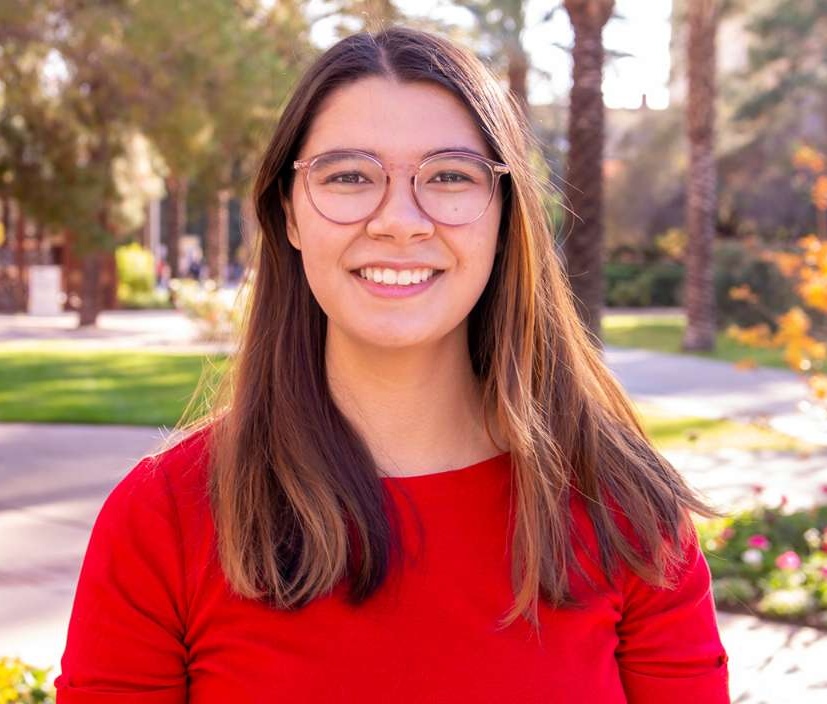
“I was lucky to experience these two sides of biochemistry, the biological and the commercial, and together they helped me realize what I was most excited about,” she said.
Now in her fourth year as a Ph.D. student, Hemesath works with Chemistry and Biochemistry Assistant Professor Yanxin Liu, whose lab focuses on the molecular and structural understanding of protein complexes related to human diseases.
Before joining the fellowship program, Hemesath was already conducting microbial research at the National Institutes of Health. She used cryogenic electron microscopy to image cyanobacteria collected from the Chesapeake Bay.
“My interest wasn’t really in the microbiology,” she said. “I was using the bacteria as a system to study and model molecular chaperones, proteins that help other proteins fold.”
When her advisor suggested she consider the microbiome fellowship, Hemesath began to see how her research could extend beyond the study of individual proteins.
“Cyanobacteria are ecologically and commercially valuable and are also known for forming toxic algal blooms when we pollute the water with excess nutrients,” she said. “They are extremely durable—and molecular chaperones are one factor that helps them withstand a lot of stress.”
A better understanding of how chaperones move and function could help other researchers who study microbes, including those seeking to engineer more resistant cyanobacteria for ecological or industrial applications.
“It’s made me consider my work differently,” Hemesath said of the fellowship. “How can I be more intersectional? How can I approach my project with a more fundamental biological view? What gaps can I fill that are relevant to others?”
###
Save the Date! Student microbiome fellows will lead an interactive panel discussion “Expanding Access to Microbiome Research and Tools to Improve Human and Environmental Health: A Discussion Among Societal Stakeholders,” on Nov. 17, 2026, from 3-5 p.m. More information coming soon to the Center of Excellence in Microbiome Sciences website.