In Memoriam: Michael P. Doyle (1942-2026)
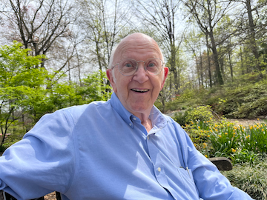
Michael P. Doyle (1942-2026), who served as professor and chair of the University of Maryland’s Department of Chemistry and Biochemistry from 2003 to 2013, passed away on April 11, 2026.
Doyle was an early leader in the organic chemistry of transition-metal-catalyzed reactions, especially those involving diazo compounds. He made seminal contributions to dirhodium‑catalyzed asymmetric carbene transformations, including cyclopropanation, C–H insertion reactions and cycloadditions. His development of C₂-symmetric dirhodium tetracarboxamidate catalysts led to the first examples of highly enantioselective rhodium-carbene reactions, thereby reshaping catalyst design.
Beyond carbene chemistry, Doyle’s research spanned multiple areas of organic and applied chemistry. He developed methods for the direct conversion of arylamines to arylhalides and provided important mechanistic insights into nitrite‑mediated oxidations of heme proteins, thereby elucidating the role of nitric oxide in biological redox chemistry.
As department chair at UMD, he recruited outstanding faculty members to the department, transformed the undergraduate education programs and expanded department diversity in very significant ways. His establishment of the Dolphus Milligan Graduate Fellowship program and the UMD chapter of the National Organization for the Professional Advancement of Black Chemists and Chemical Engineers drew national attention, and higher numbers of Black and African American students began pursuing doctoral degrees in chemistry and biochemistry at UMD, according to Chemistry and Biochemistry Professor Emerita Janice Reutt-Robey. Doyle also brought major events to UMD’s College Park campus, including the International Chemistry Olympiad and the American Chemical Society’s National Organic Chemistry Symposium. He also emphasized the importance of undergraduates pursuing research opportunities and mentored many UMD students while serving as chair.
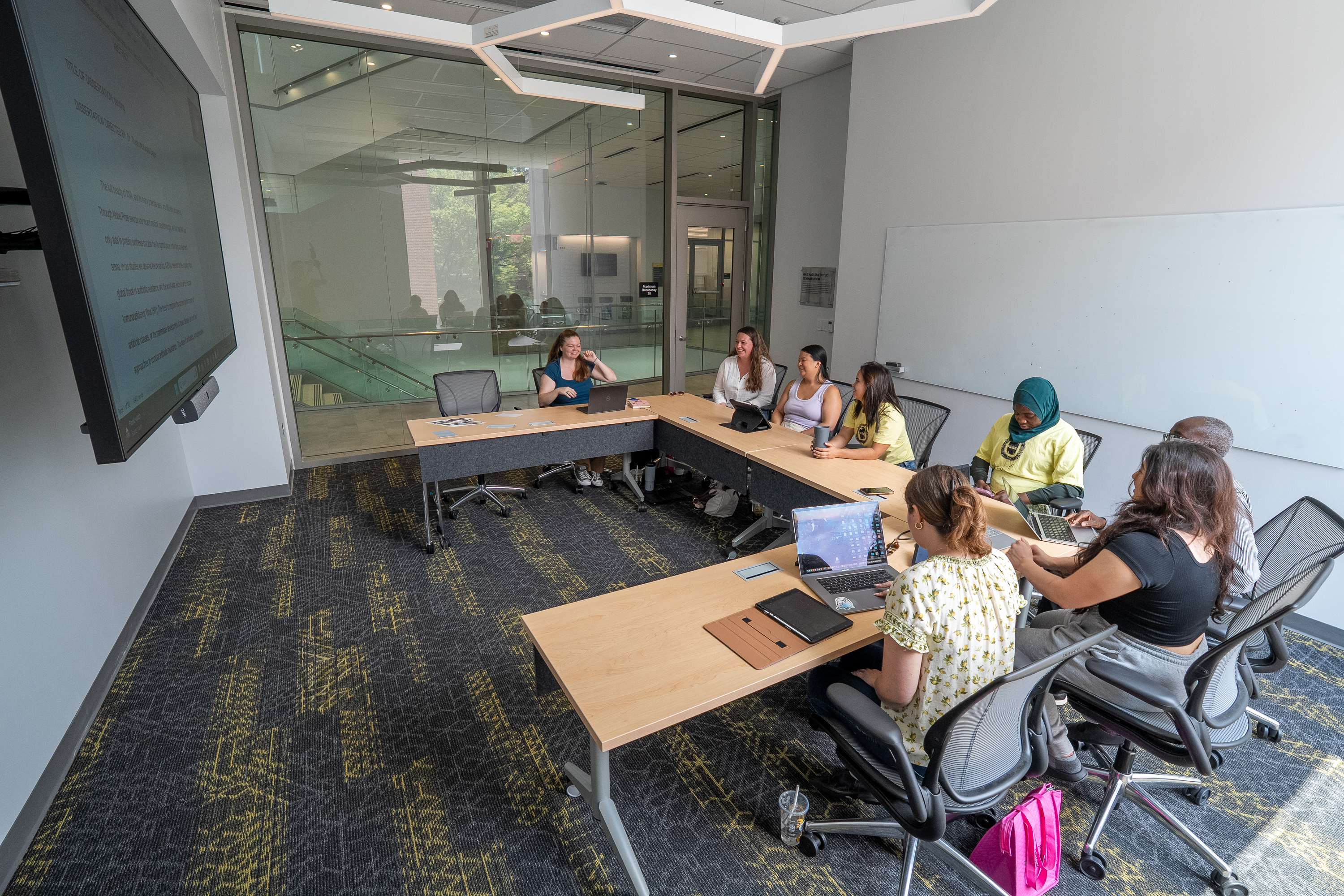
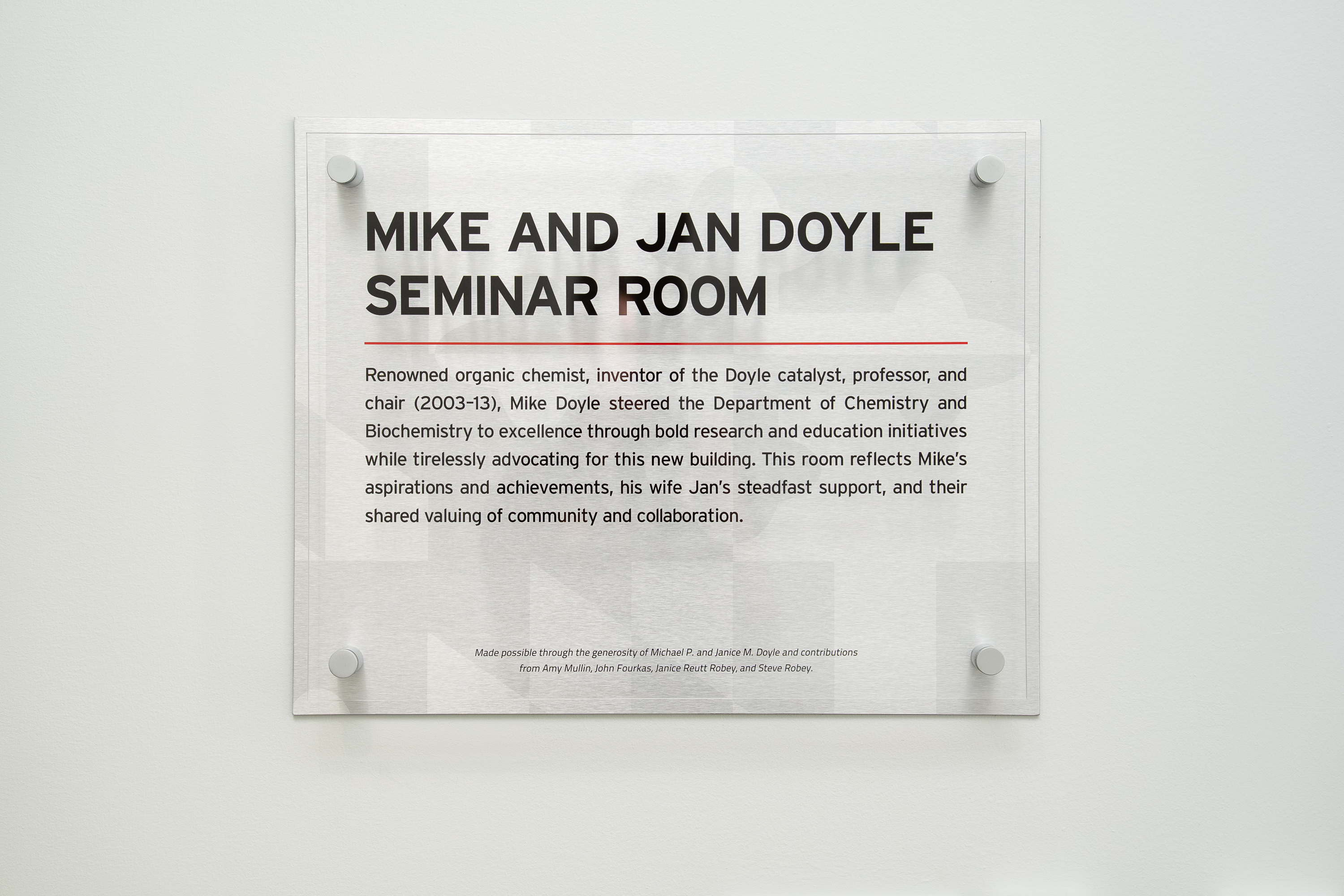
Doyle lived a life of gratitude, always giving back in every way he could. At UMD, the Department of Chemistry and Biochemistry received philanthropic gifts to name the Mike and Jan Doyle Seminar Room in the new Chemistry Building, which opened in 2024.
Following a $150,000 donation from Doyle and his wife Jan, Chemistry and Biochemistry Professors John Fourkas and Amy Mullin and Reutt-Robey together contributed $50,000 to further recognize Mike Doyle’s contributions to the department and allow for the naming of a larger seminar room in a prominent location in the new building.
“As department chair, Mike pursued a path of excellence for chemistry and biochemistry, and he was a tireless advocate for a new chemistry building,” Reutt-Robey said at the time. “This wonderful new building represents Mike’s vision, and I wanted to ensure that the Mike and Jan Doyle Seminar Room was located in a prominent place in the new building.”
“Mike brought both me and Amy [Mullin] to the University of Maryland, and we shared in his vision of making our department nationally prominent,” Fourkas said at the time. “Mike and Janice Doyle have been staunch supporters and friends to both of us, and we are delighted to be able to help have this room named in their honor.”
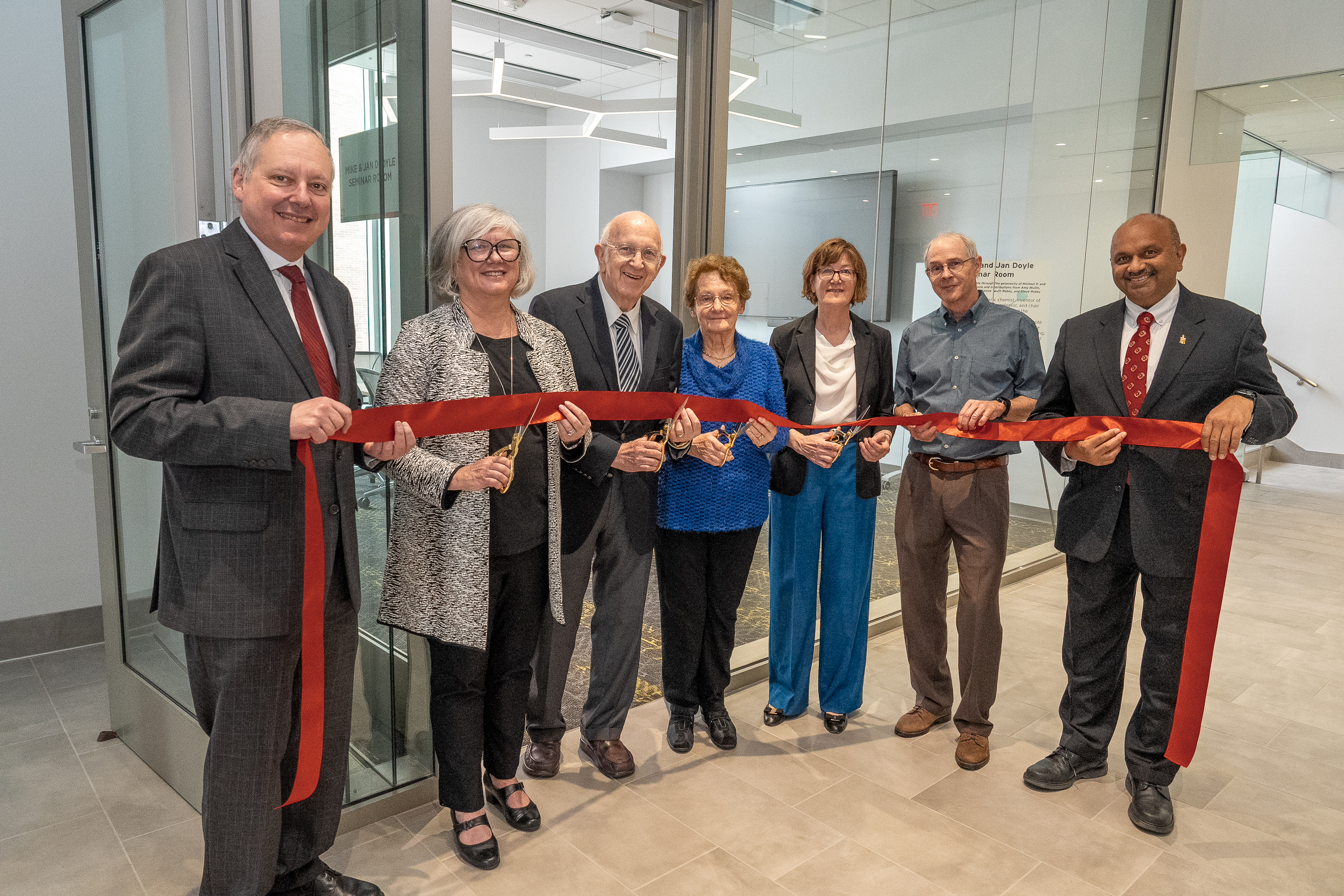
Before joining UMD, Doyle held faculty appointments at Hope College, where he rose to department chair and was honored as the Kenneth G. Herrick Professor of Chemistry; at Trinity University, where he was the Dr. D. R. Semmes Distinguished Professor of Chemistry; and at the University of Arizona. Following his time in College Park, Doyle joined the University of Texas at San Antonio, where he held the Rita and John Feik Distinguished University Chair in Medicinal Chemistry and was named professor emeritus in 2024. Doyle earned a Ph.D. from Iowa State University in 1967 and a B.S. from the College (now University) of Saint Thomas in 1964.
Doyle’s impact on chemical science went far beyond his research accomplishments, as he was a natural community builder and leader. He played a key role for many years in the Division of Organic Chemistry (DOC) of the American Chemical Society (ACS). He served on the DOC executive committee for 23 years, holding elected positions as a member, councilor, and chair of the division. His contributions to the community extended beyond the division, including significant commitments to the ACS. Notably, he served as the chair of the Editorial Board of Chemical & Engineering News (C&EN) and in numerous other roles within the Society. More recently, he founded the International Carbene and Nitrene Consortium to promote collaboration and cross‑disciplinary exchange in this specialized area of catalysis research.
A defining feature of Doyle’s career was his commitment to undergraduate research as a core component of chemical education. More than 160 undergraduate students co‑authored peer‑reviewed publications with him, many of whom went on to distinguished careers in academia, industry, and medicine. He was the first president of the Council on Undergraduate Research and the first chairman of the National Conferences on Undergraduate Research, helping to institutionalize undergraduate scholarship as a national priority.
Doyle was highly respected throughout the chemical community, and his achievements were recognized with more than 25 honors and awards. Among these were: the Henry J. Albert Award of the International Precious Metals Institute (2020) for contributions to dirhodium chemistry, the Arthur C. Cope Senior Scholar Award from the ACS (2006), an NIH Merit Award (2003), the George C. Pimentel Award in Chemical Education from the ACS in (2002), and election to Fellow of the American Association for the Advancement of Science (1995) and inaugural Fellow of ACS (2009). His international honors include a Japan Society Invitation Fellowship for the Promotion of Science (1996), Doctor Honoris Causa of the Russian Academy of Sciences (1994), and the DOC Gassman Distinguished Service Award (1998).
He is survived by his wife of 62 years, Janice (nee Wodziak), daughters Teresa Klier (Thomas) and Jennifer Hill (Michael), and his four grandchildren: Alexander, Suzanne, Joshua and Christopher.
This article is adapted from content provided by the Doyle family.