Pushing the Boundaries of Therapeutic Possibility
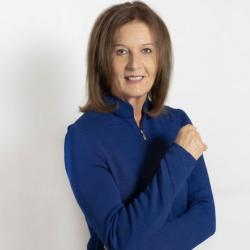
Biotech executive Krisztina Zsebo (B.S. ’77, biochemistry) has spent more than four decades working at the forefront of therapeutic discovery, bringing life-changing drugs to the patients who need them.
In the highly competitive world of drug development, Krisztina Zsebo (B.S. ’77, biochemistry) is all about pushing the boundaries of what’s possible.
“I'm not interested in ‘me too’ kind of work, you know, new formulations, mediocre advancements, that kind of thing. I just get bored working on minor improvement kinds of projects,” Zsebo explained. “I've always been drawn to the big bets, the high risk and high reward. That’s what’s always interested me.”

Currently CEO and chairman of California biotech companies VST Bio and VasoRx, Zsebo has spent more than four decades working at the forefront of therapeutic discovery, leading research and development for new drugs and therapies at big and small pharmaceutical and biotechnology companies. Driven to bring life-changing drugs to the patients who need them, Zsebo finds inspiration in every breakthrough. Right now, it’s VST Bio’s promising new investigational antibody treatment for stroke patients.
“We developed an antibody that has a multitude of activities that are very important in stroke care. Our antibody blocks edema associated with stroke, and it blocks the inflammation, and in preclinical studies, we’ve demonstrated that we can dramatically improve stroke outcomes,” she said. “We hope to initiate phase 1 clinical trials this year, which will be in normal human volunteers, and then move into stroke patients next year, and I’m very excited about that.”
A fascination with ‘how life works’
Born in Hungary, Zsebo was raised in the suburbs outside Washington, D.C. As an undergraduate at the University of Maryland, she first encountered biochemistry, the science that would prove pivotal to her future career.
“I started out studying botany and then plant physiology, and I realized what I really loved was the biochemistry of it all. So, I switched majors and went into biochemistry,” she explained. “Biochemistry, it’s how life works, how cells function at a chemical level, the physical chemistry. The hands-on work in the lab, doing high-performance liquid chromatography analyses and all the wonderful biochemistry that I learned at the University of Maryland when I was an undergraduate, I think it gave me a really good background. That foundation has certainly been very helpful for me.”
After graduating from UMD, Zsebo spent a year as a research assistant at the National Institutes of Health and Dartmouth College's medical school, where she developed a growing interest in human health and pharmaceuticals. She went on to earn her master’s in biochemistry and biophysics at Oregon State University and her Ph.D. in comparative biochemistry at the University of California, Berkeley—and quickly learned that her biochemistry skill set was in high demand.
“My skill set was a good fit for the pharmaceutical and biotech industries,” Zsebo explained. “When I went into biotech in 1984, there were two big biotech companies, Genentech and Amgen, and Amgen recruited me before I even finished my Ph.D. At that time, anybody who could clone anything was worth their weight in gold.”
From R&D to VC—and more
At Amgen, Zsebo got her first hands-on experience in the pharmaceutical industry, working on research and product development teams for billion-dollar breakthrough drugs that made a game-changing impact for patients.
“I was a significant contributor to the Neupogen project, which has helped save countless lives in chemotherapy patients. It basically helps them get their white count back after high-dose chemotherapy,” she said. “Epogen was another success for us; it’s standard therapy now for dialysis patients. It was really rewarding for me to help bring these drugs to market.”
As vice president of research and development for Cell Genesys in the ’90s, Zsebo led the company’s first Investigational New Drug application with the Food and Drug Administration (FDA) for a novel gene therapy approach to fight HIV infection. She also oversaw a research program in developing an animal model that makes fully human antibodies for therapeutic use. A few years later, as vice president of the biopharmaceutical and implant division at ALZA, Zsebo led the development of an implant for the treatment of advanced prostate cancer.
“I led a division that was developing a combination drug device called Viadur for prostate cancer,” she explained. “When we filed the FDA New Drug Application for the device, it gave me a much broader perspective, not only on early clinical trials, but what it takes to get something approved, and that was a really valuable experience.”
To broaden her perspective on the financial side of drug development, Zsebo joined a San Diego venture capital group in 2004, then took on leadership roles at smaller biotech startups before joining VasoRx in 2018 and VST BIO two years later. Still heavily involved in R&D today, she draws on her pharma and biotech experience to advance her companies’ mission of discovering and advancing new drugs and therapeutic technology. And with VST Bio’s investigational stroke therapy now moving closer to clinical trials, Zsebo is excited about the possibilities ahead.
“This molecule is truly fascinating, and we’re discovering new things literally on a week-by-week basis. Basically, anytime you have severe edema or swelling or acute inflammation, this drug potentially can help. That encompasses stroke, Alzheimer’s, sepsis and more, so we actually have data for a number of indications that look very promising,” she said. “I’m looking forward to seeing what’s next.”
A contributor to more than 100 publications, with 34 patents and more pending, Zsebo is grateful for her success and still credits much of it to her early biochemistry experiences at UMD.
“UMD was absolutely critical,” she said. “You know, if it wasn't for the University of Maryland biochemistry program, I wouldn't have gone into this field at all. It gave me the foundation I needed to jump to the next level.”
Now, after more than 40 years, Zsebo is eager to see where drug development—and her career—will go from here.
“From my experience, I know for a fact that some projects work and some projects don't, and you have to savor the ones that do, because there are a lot of them that don't,” she reflected. “I'm just very proud of my career and the accomplishments that have led to breakthrough therapies for so many people.”