From Lacrosse Long Sticks to the Chemistry of Nanorods
Chemistry Ph.D. candidate Jordan Wilson’s research on the optics of nanomaterials has applications in anti-counterfeiting, biosensors and more.
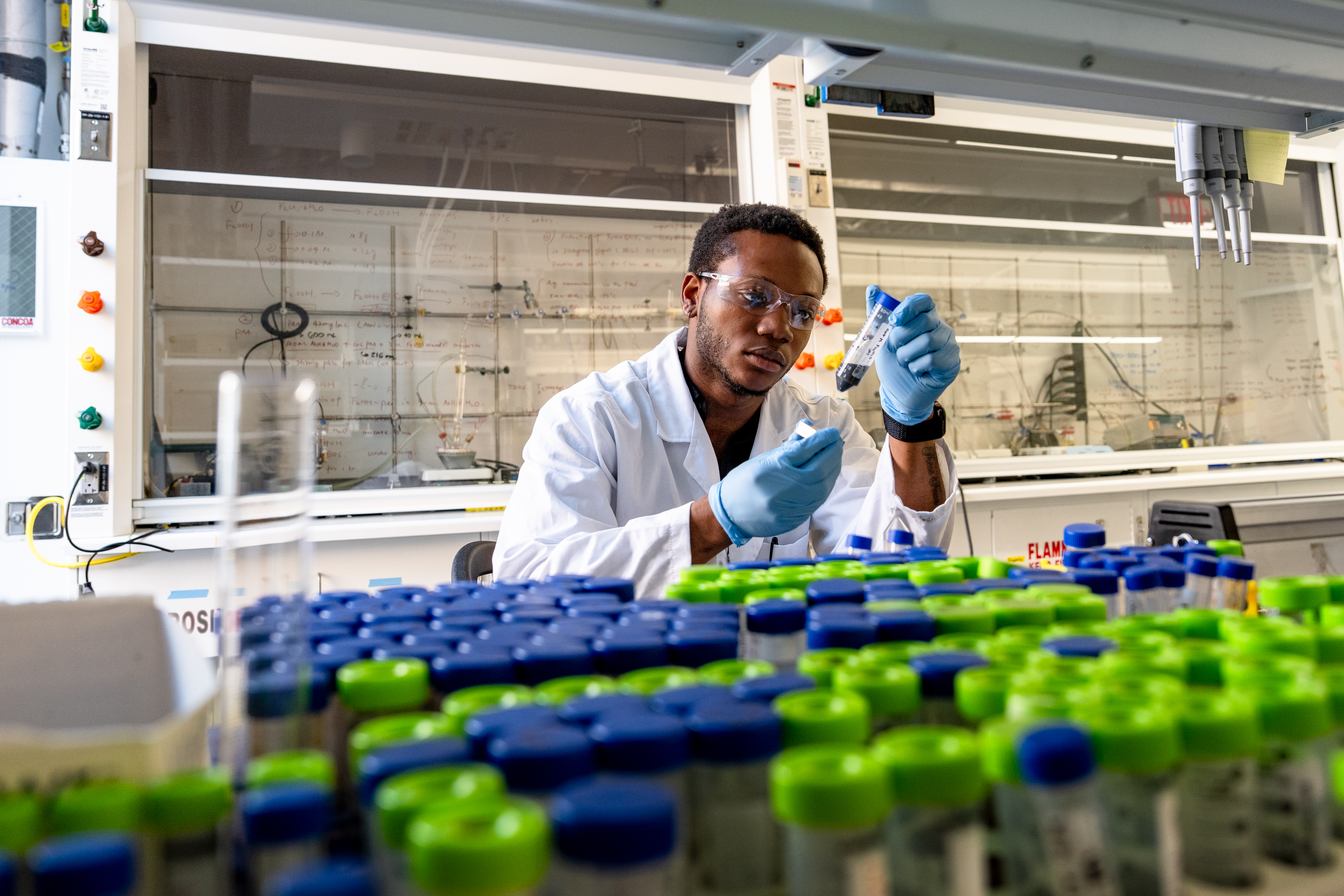
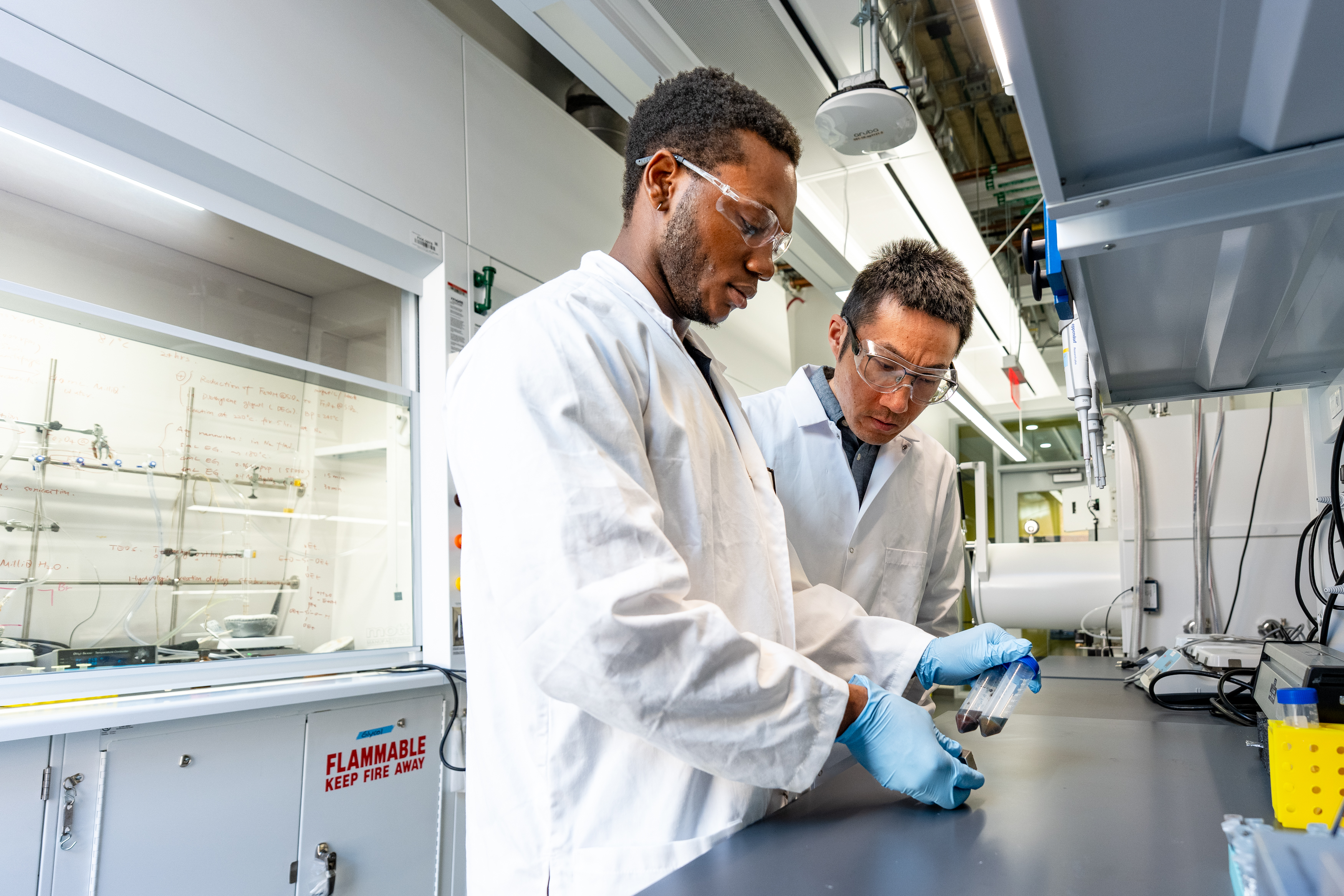
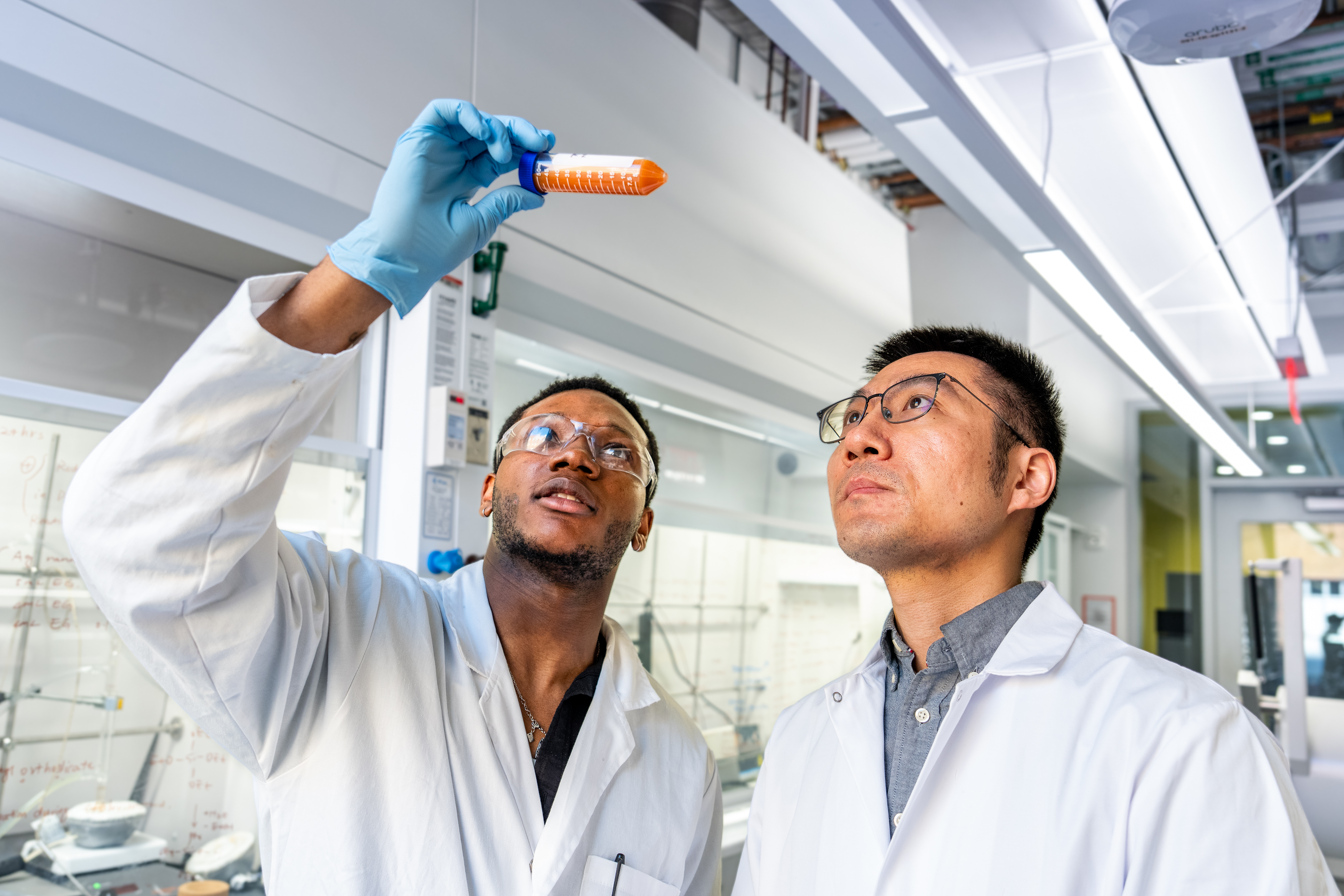
Whether it’s adapting to challenges on the lacrosse field during his undergraduate years or troubleshooting complex chemical reactions in the lab, University of Maryland chemistry Ph.D. candidate Jordan Wilson understands the importance of persistence and problem-solving. That mindset has helped him succeed as a graduate student studying nanomaterials with Chemistry and Biochemistry Assistant Professor Zhiwei Li.
“Being a perfectionist, I got drawn to chemistry because I really like the process of progress,” Wilson said. “Some days things work, some days they don’t. I like figuring out how to make them work.”
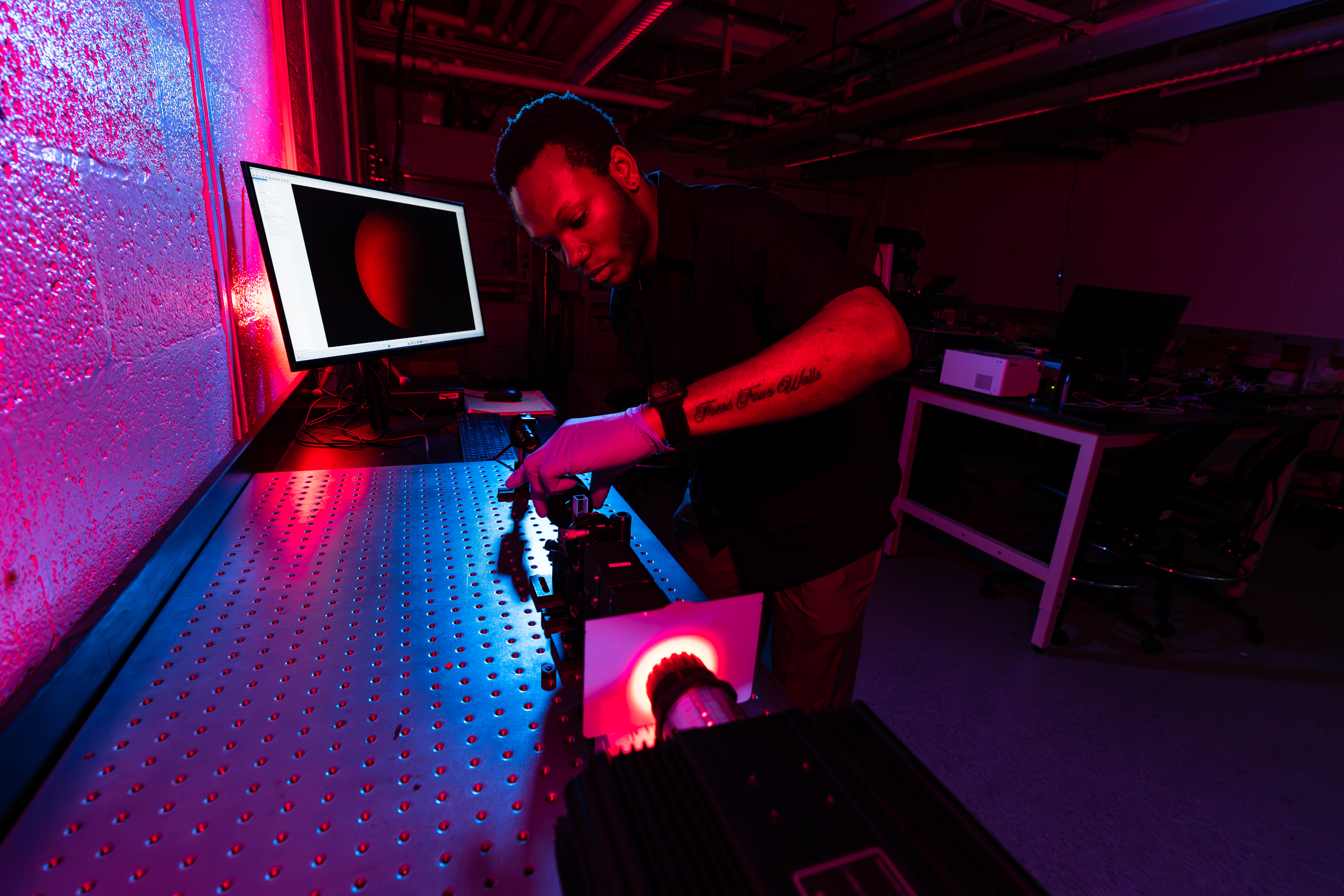
Wilson’s research focuses on developing new materials to control the polarization and transmission of light for applications in advanced optical technologies. By better understanding the optical chemistry and physics of these materials, companies can improve nanomaterials for advanced displays like those used in augmented reality headsets, smart windows, information encryption and more. Wilson’s steadfastness when experiments go wrong has helped him solve countless issues in the lab. His love of building new things also drew him to Li’s lab in the first place—as the group’s first graduate student.
“I loved the idea of being the first person in a new lab. I wanted to build something up from scratch,” Wilson said. “That's why I chose the path to where I am now, and I don't regret it at all.”
Growing up, Wilson split his time between Florida and New York City and found two passions: chemistry and sports.
He began playing lacrosse in middle school through Harlem Lacrosse, which brought the sport to inner-city schools. He was a natural, and after playing for only a few years, he got the opportunity to play for a private school in Pennsylvania. That’s also where he found his calling for chemistry.
“I always used to watch crime shows, so I really wanted to do forensics, criminology or toxicology,” Wilson said. “But a lot of the schools that I was looking at for college didn't have forensic science as a major. The only pathway was through another science. Naturally, I chose chemistry because it was the one thing that came easy to me.”
Wilson initially didn’t plan to play lacrosse at the collegiate level because he wanted to focus on his studies at Siena College in upstate New York. But he couldn’t help feeling that something was missing from his life. He still wanted to be an athlete, but didn't want the huge time commitment needed for both. That’s when he decided to transfer to a school where he could join the lacrosse team and continue studying chemistry. His middle school coach connected him to the coach at Drew University in New Jersey, and Wilson transferred during his junior year.
Juggling college athletics and chemistry at Drew University took some getting used to. Beyond athletics and coursework, Wilson also began doing research in atmospheric chemistry.
“Balancing lacrosse and chemistry was decently challenging my first semester, but it got easier once I got the hang of my time management,” he said.
In the fall of Wilson’s senior year, he committed fully to a career in research. His professor noticed his interest in lab work and his dedication to understanding why experiments succeeded or failed. She encouraged him to apply to graduate schools to pursue a Ph.D.—and, after receiving the Dolphus Milligan Graduate Fellowship at UMD, which provided two years of funding, he came to College Park.
“That fellowship was the main reason I came to Maryland,” Wilson said.
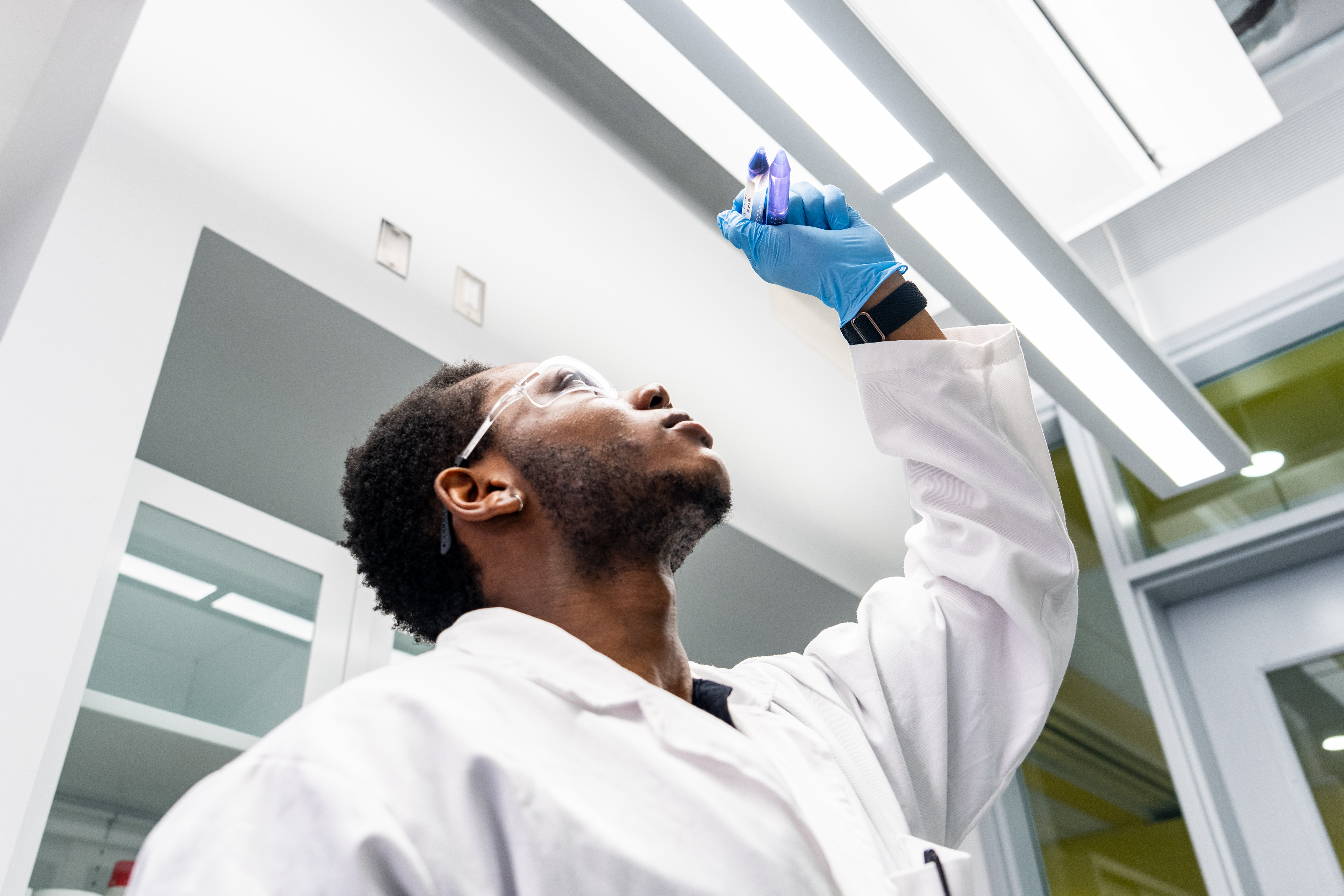
After rotating in several labs and exploring new research interests, Wilson now studies how the structure and orientation of certain nanomaterials dictate how they interact with light. He’s only two years into his Ph.D., but he’s already published two first-author papers—one showing how iron oxide nanorods can be custom-assembled to produce different colors and another characterizing how they polarize light.
These optical materials are used in applications like anti-counterfeiting, where optical patterns can become visible under specific magnetic conditions; polarization filtering; and faster optical communication, potentially improving how information is transmitted for the internet and telecommunications. Optical nanomaterials are also used as sensors that change color when they interact with compounds, providing applications for food quality control, environmental analysis and biosensing. Wilson and Li’s research on the basic physics of these materials could inspire new and improved products and applications.
After Wilson graduates, he wants to work in research and development at a federal lab like the National Institute of Standards and Technology or Sandia National Laboratories. Wilson says his time at UMD was formative in forming that goal and preparing him to achieve it.
“I've really enjoyed my time at UMD,” Wilson said. “The people that I've met here have helped me grow as a person, and all the milestones that I've gone through—like my literature exam and candidacy—definitely helped me learn about who I am and where I want to go.”