Creative Chemistry Class Inspires Undergrads and Local Elementary School Students
A hands-on UMD course gives undergraduates the opportunity to share the magic of chemistry with third graders in Prince George's County.
Ask most people where their love of science began and they usually point to a single, specific memory—a meteor shower, a nature documentary or a visit to a museum.
For Lenea Stocker, a senior lecturer in the University of Maryland’s Department of Chemistry and Biochemistry, her passion sparked years ago in a high school chemistry class, thanks to a teacher who could conjure up classroom lessons that looked like magic.
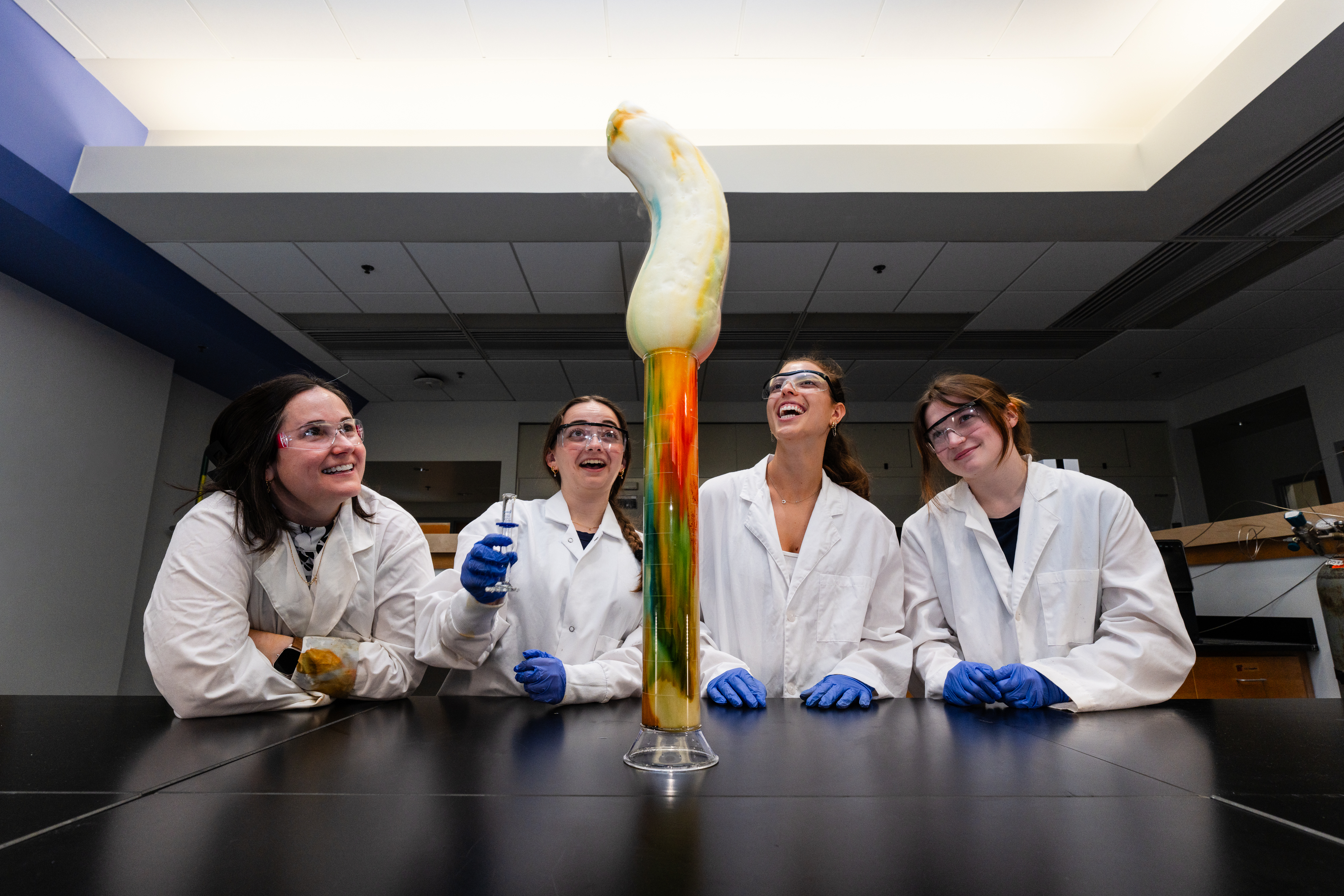
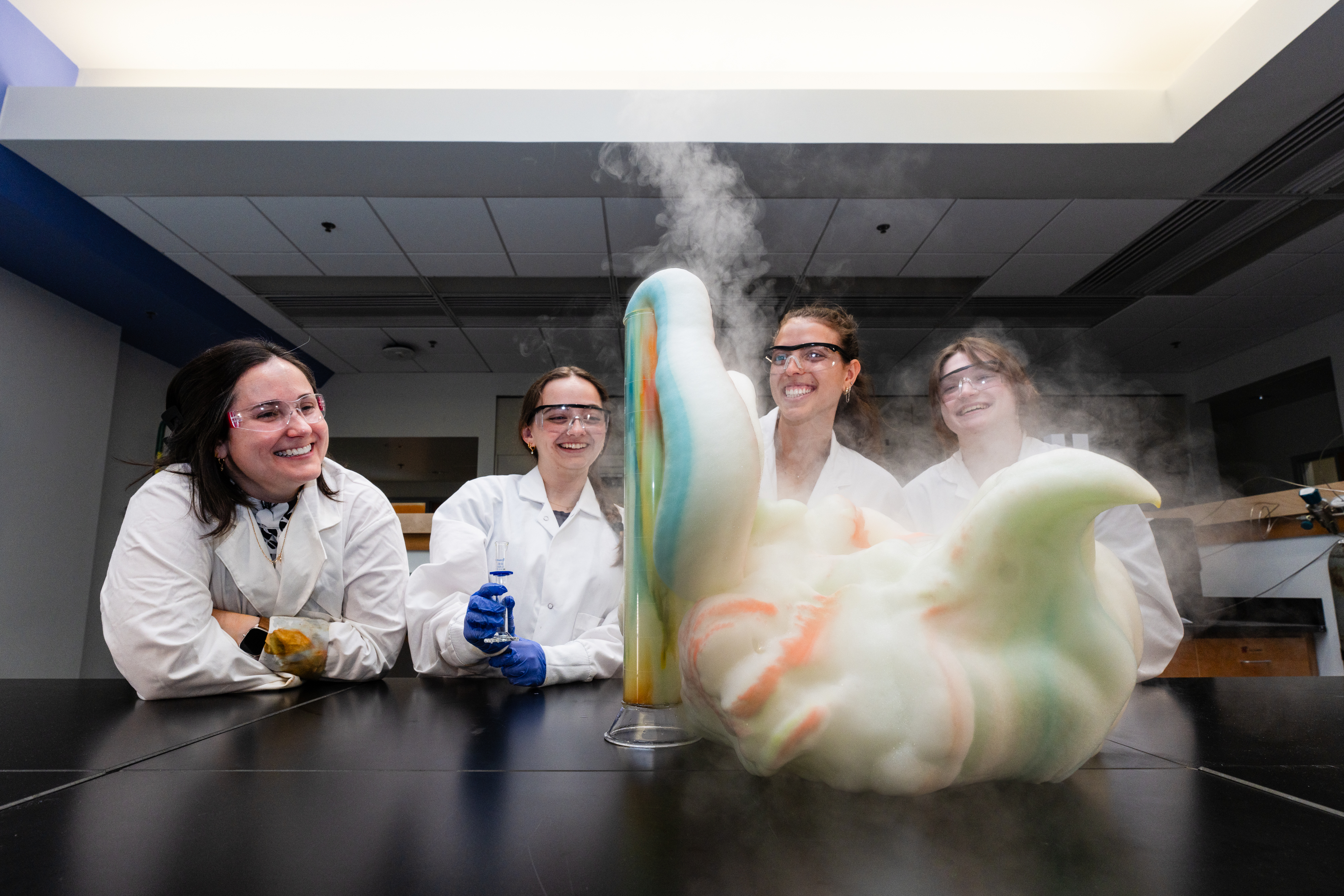
“She used to do fun chemical demonstrations,” Stocker recalled. “Elephant toothpaste, carbon snakes—all of these neat things that just got me excited about chemistry. I couldn’t stop watching and wondering. That is ultimately where my journey started.”
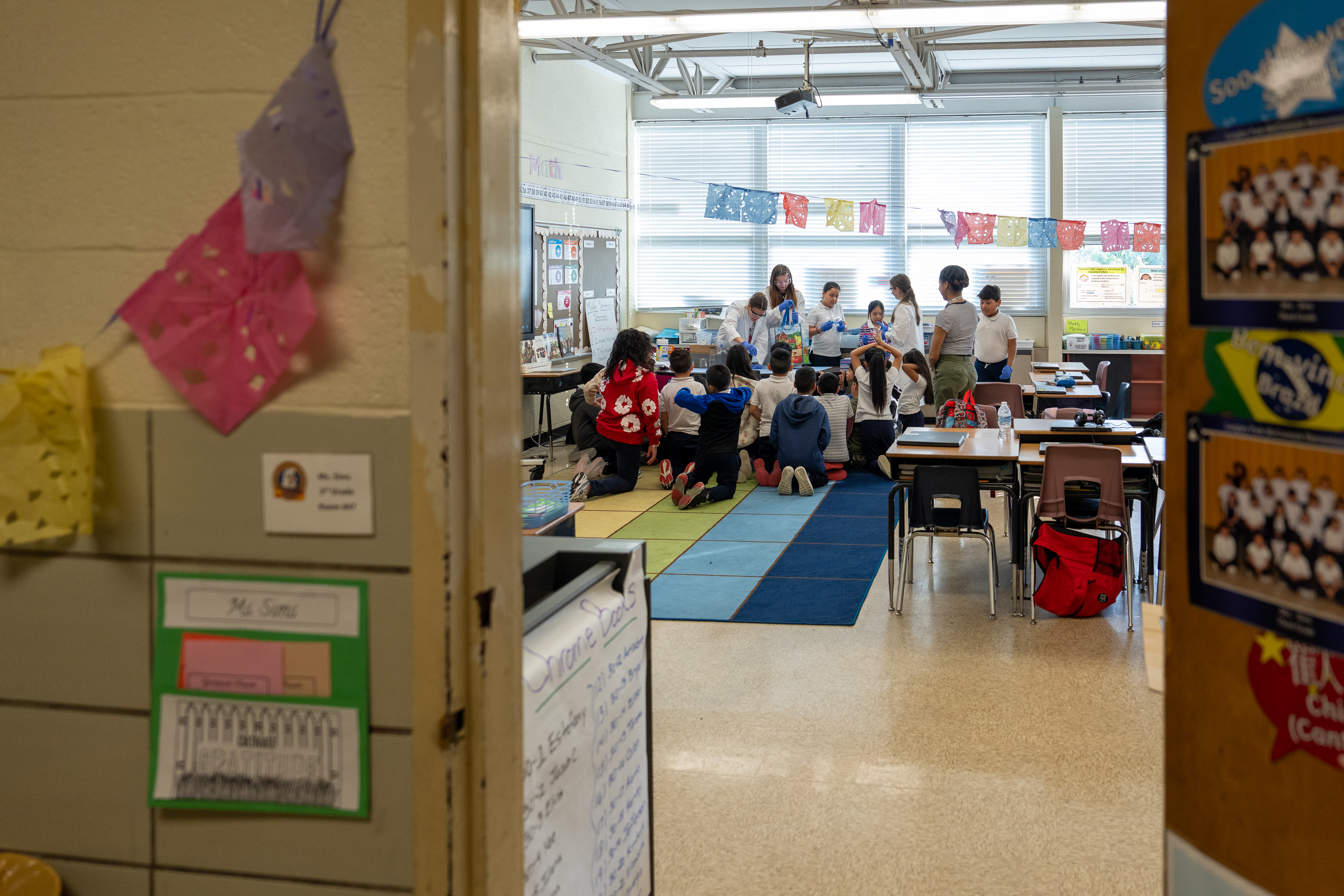
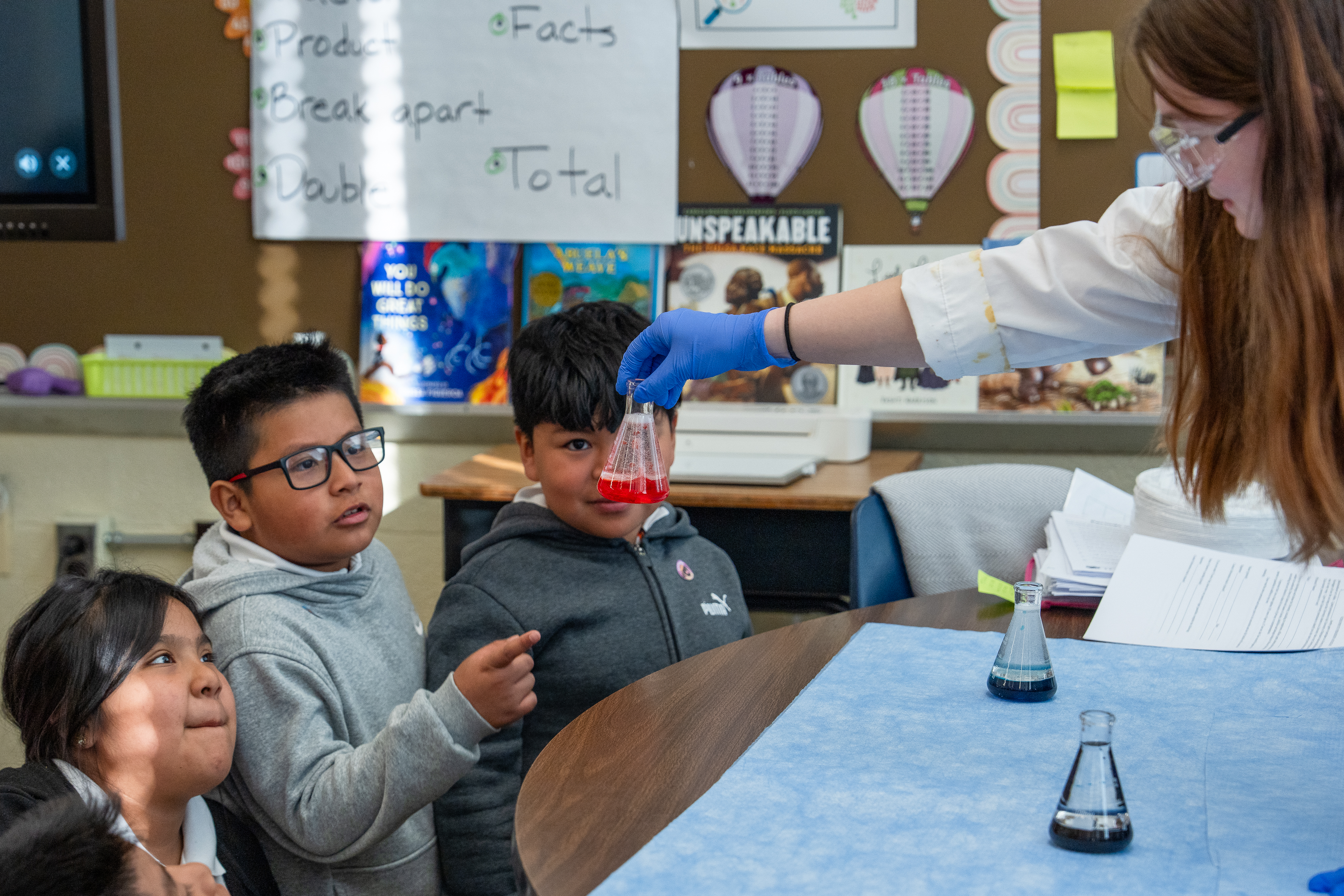
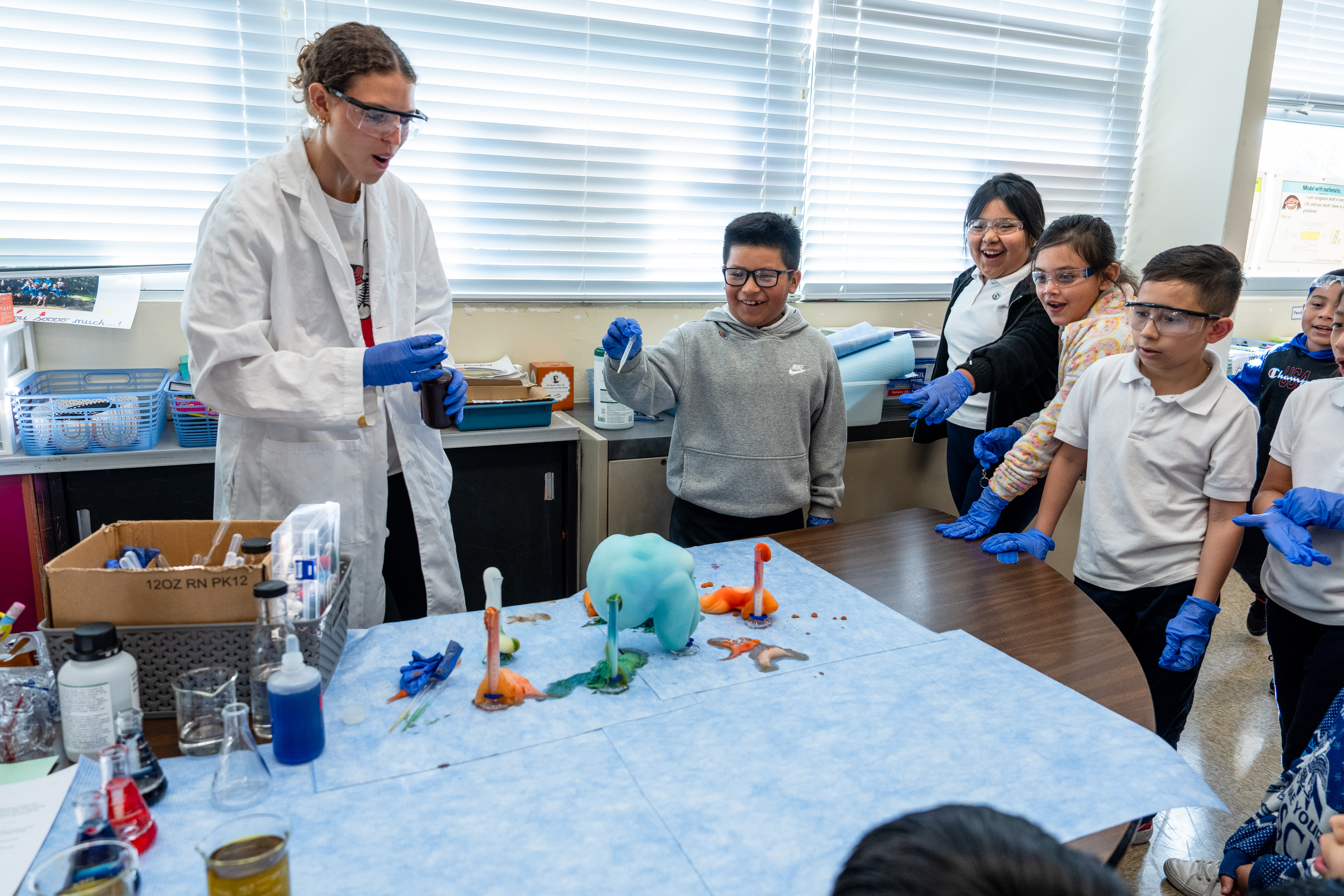
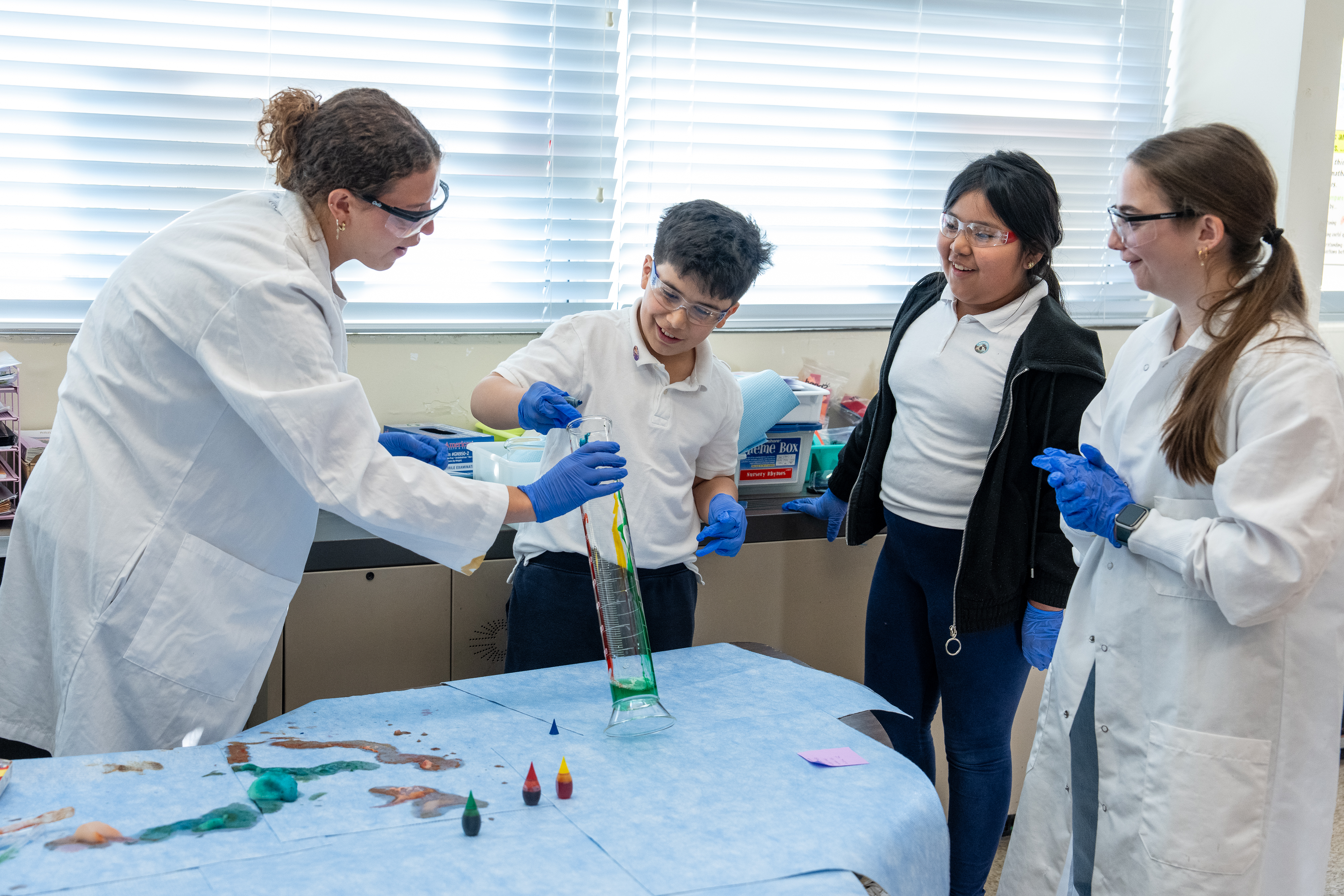
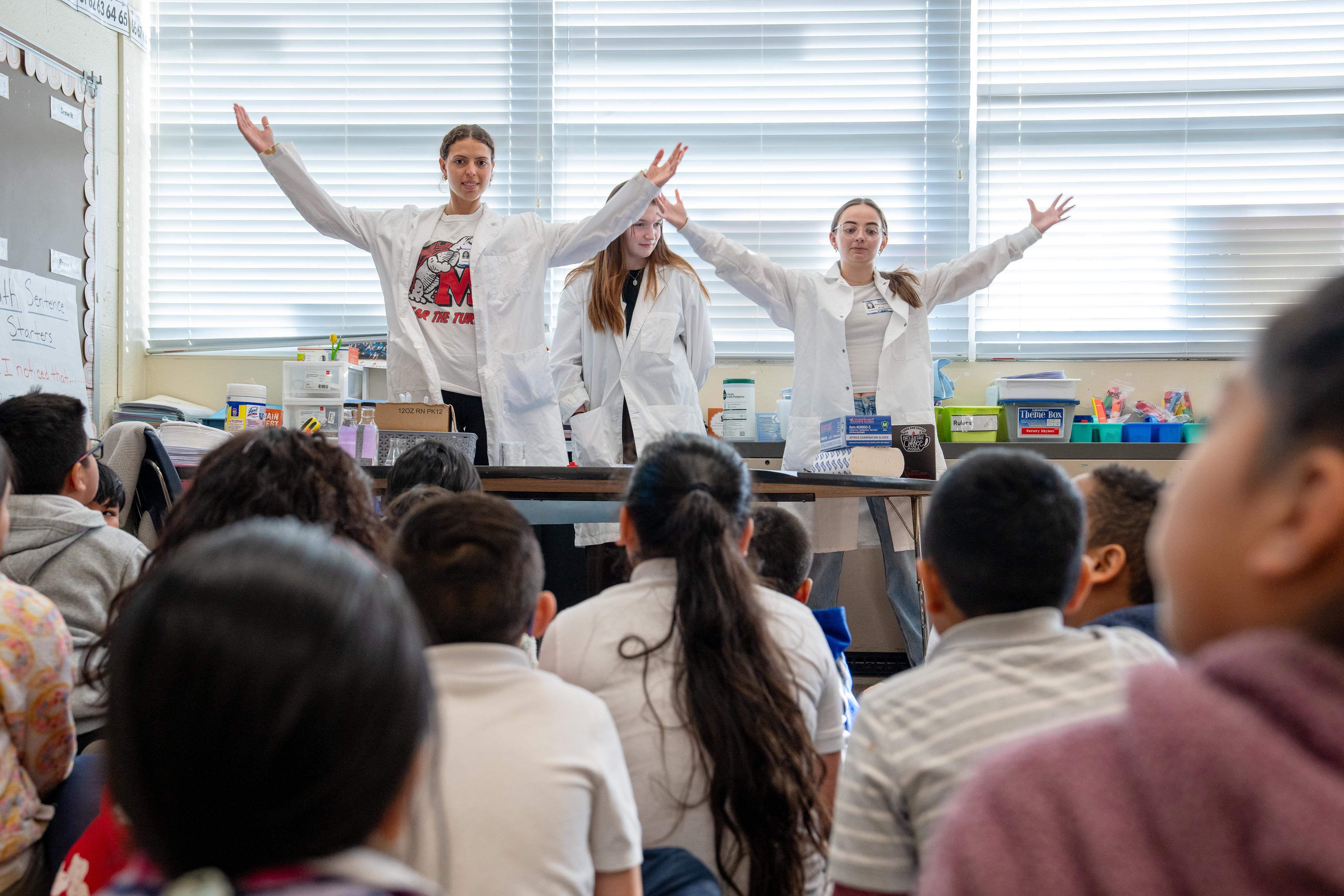
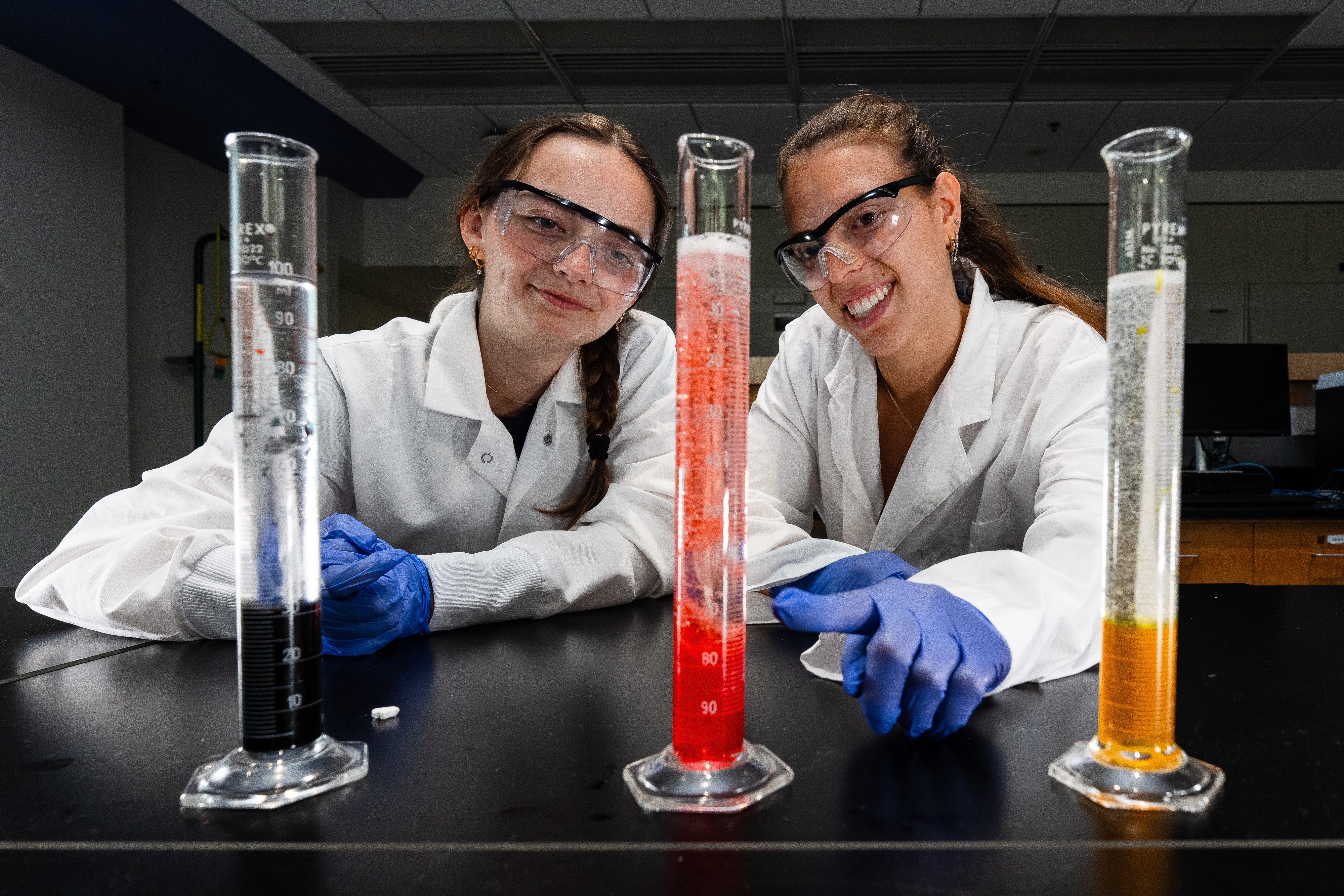
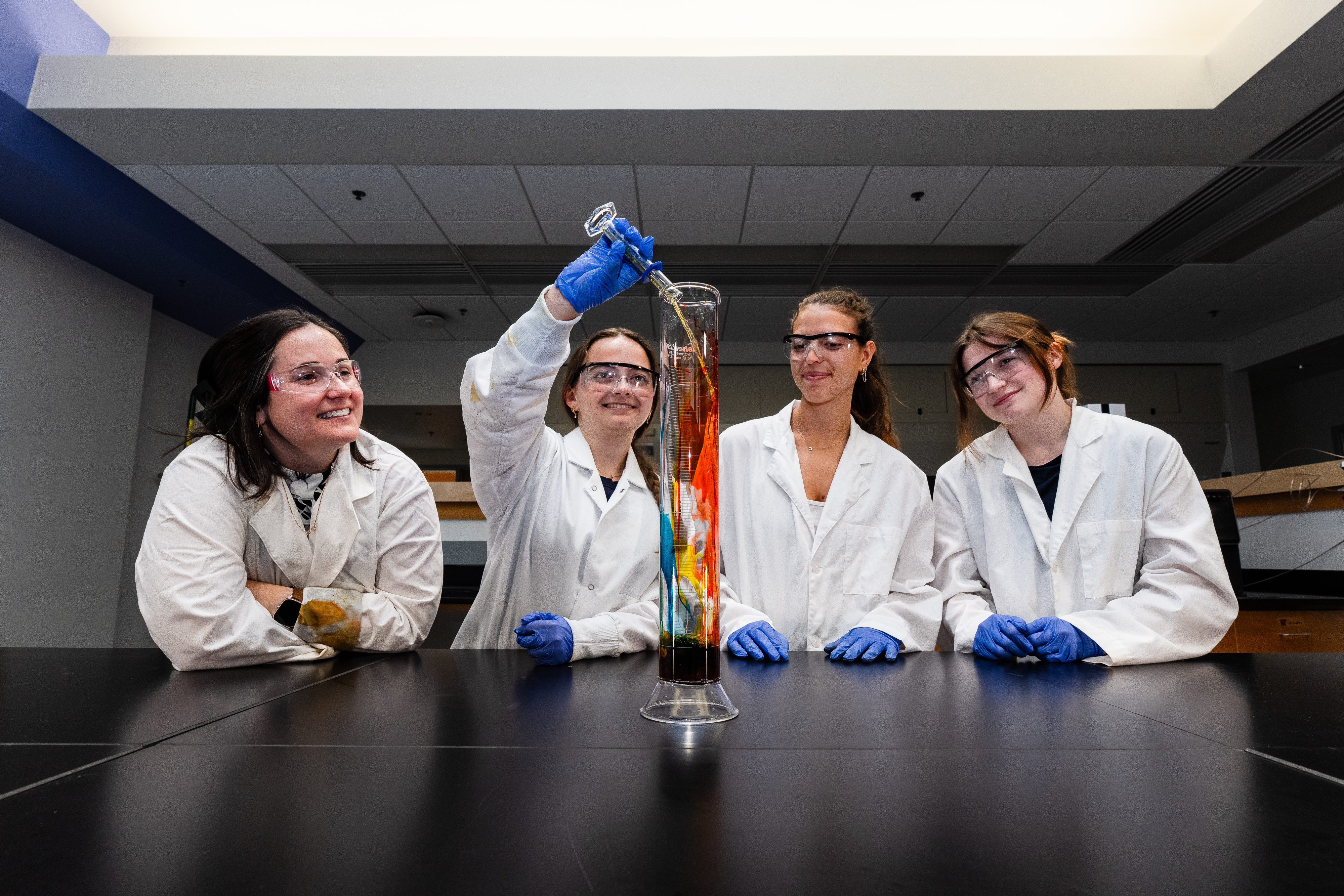
Decades later, Stocker channeled that same spark into a one-credit course she created called CHEM 316: “Chemical Demonstrations and Outreach.” Every Friday morning, Stocker coaches undergraduate students on how to perform chemistry demonstrations that foam, glow, fizz and erupt. Late in the semester, the students take what they learned into local elementary school classrooms, sharing the magic with wide-eyed third graders.
For the undergrads, the experience is as much about learning to communicate the science as it is about mastering it, Stocker says— to slow down, find the right words and rediscover what drew them to chemistry in the first place.
“For my students, the experience rekindles what made chemistry fun for them to begin with,” Stocker explained. “And for young kids who’ve never seen science in action before, it lets them know that they can learn and play with chemistry too.”
A course built around curiosity
Stocker has spent years recreating the magic she felt when her high school teacher performed flashy chemistry experiments in the classroom. In 2018, she organized the first Kids and Chemistry Demonstration Day, a grant-funded program that brought local elementary schools to UMD’s campus. For years, she has run chemistry demo booths at Maryland Day for visitors. She even planned the chemical reactions executed on stage to celebrate the 2021 groundbreaking of the new Chemistry Building and its dedication in 2024.
But Stocker wanted to create something more sustainable and accessible for students who wanted to learn how to communicate chemistry effectively to a general audience. She eventually came up with the idea of CHEM 316—a course where students wouldn't just perform experiments, they would also understand why they work and how to explain them.
The class launched in fall 2024 and became a permanent offering the following spring. Open to any students who have completed both their general and organic chemistry sequences, it has attracted more than just traditional chemistry and biochemistry majors.
Public health science major Caley Navins, who had taken organic chemistry with Stocker, signed up for the class in spring 2026. So did Amy Lepore, a senior double-majoring in chemistry and biological sciences, who was drawn to the class because of her interest in teaching.
“Before this course, I never really enjoyed a chemistry lab. The goal for those classes was just to survive—with an A, hopefully,” Navins explained. “But the goal here is to get creative and integrate chemistry into fun activities. Dr. Stocker explains the chemistry mechanisms behind the experiments we do, but we also get to have fun. I always feel childlike excitement when we make something explode—safely, of course.”
“What I love is that we have the chance to ask a lot of questions and then test them ourselves. You have so much more fun and learn more when you’re doing it all firsthand,” Lepore said. “We always spend the last part of class making small adjustments to our experiments just to see if anything cool happens. It’s like we get to safely ‘play’ chemistry rather than just following a rigid list of instructions.”
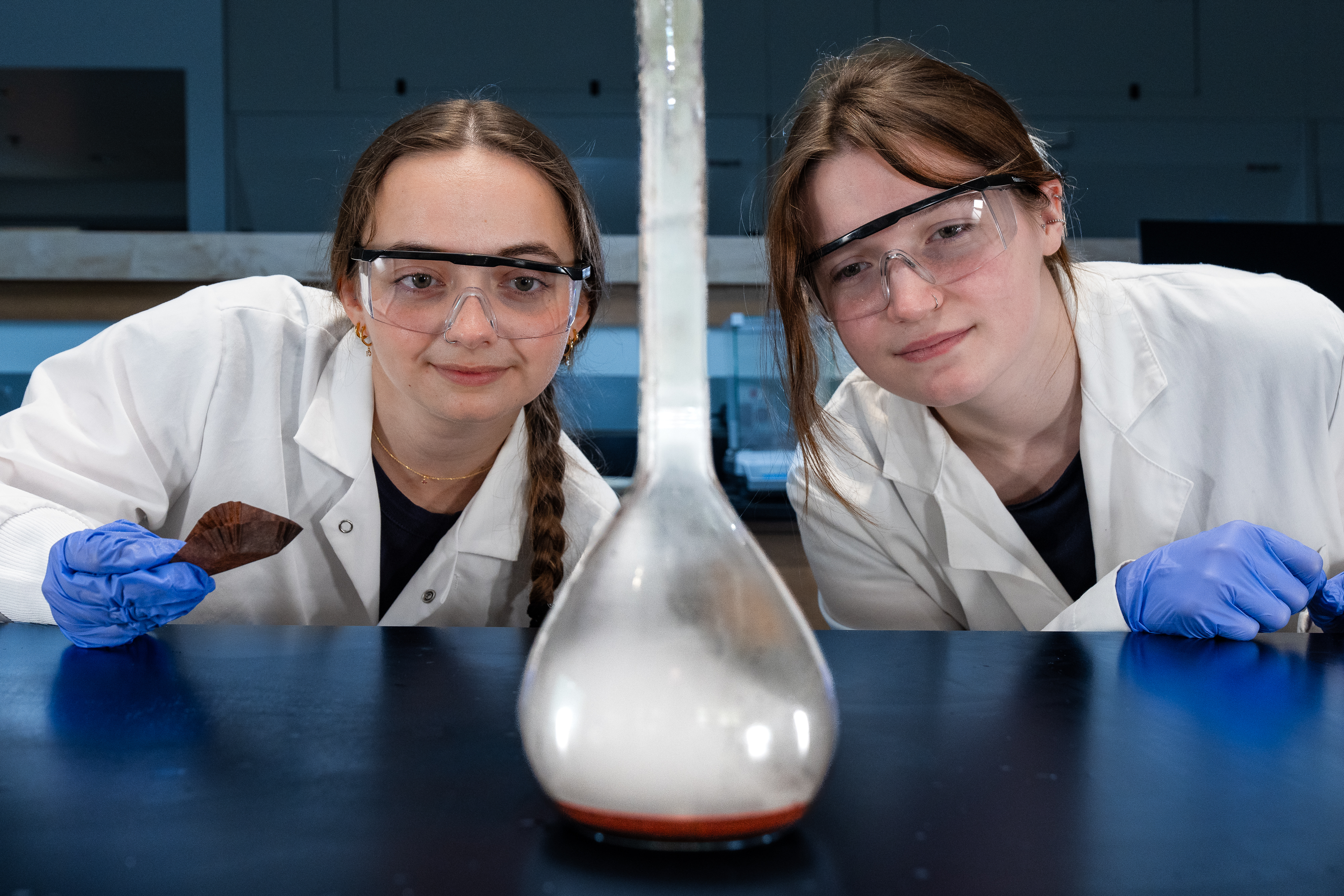
Every week, Stocker guides the class through a new concept and demonstration. She curates the experiments in her syllabus for visual impact, safety and their connection to concepts already encountered in a chemistry classroom—including chemiluminescence (the emission of light from a chemical reaction), redox reactions (reactions in which oxidation states change), gas expansion, thermodynamics and more. Students in the class often get to create keepsakes of their experiments; they have silvered the inside of Erlenmeyer flasks or transformed pennies into what appears to be gold through alloying, taking their results home as souvenirs.
Stocker also sees each session as an opportunity to learn something new, a reminder that even teachers never stop being students.
“It’s a learning experience for me as well,” Stocker said. “I’ll see something new somewhere and find out how it works, and then I tell my class. I’m always learning, which is something I also want to show my students.”
Passing on the magic
But the centerpiece of CHEM 316 isn’t a midterm or a lab report—it’s a field trip.
Each semester, Stocker’s students contact elementary schools in Prince George’s County, schedule a classroom visit, and show up with lab coats, safety glasses and a bag of Lego bricks. The Legos are for explaining atoms and molecules, a deliberate choice that allows them to meet kids on familiar ground before introducing anything unfamiliar.
“My students also represent a wide range of backgrounds, and I can tell the children notice,” Stocker said. “These third graders can see a group of college students, real people who look like them, doing real science. And that sends a message no textbook can.”
For Joel Ukpelegbu, a public health and chemistry double major, that message is personal. As one of the students who helped pilot Stocker’s class, he recalled his own outreach visit with the course to the very elementary school he attended as a child.
“I went to my old school, which was a lot of fun. I used what we learned to make chemistry interesting for children,” he said. “I loved going there and teaching. The main takeaway I had was that it felt really meaningful for me to give back that way.”
Stocker customizes some of the demonstrations to make them interactive, allowing her CHEM 316 students to guide the elementary school students with a more hands-on approach. With an emphasis on safety and an understanding of the mechanisms behind the experiments, the demos help the participants build a foundation in science and research principles, one Stocker hopes will stay with them for years to come.
“I’m hoping that, especially [my students] who go on to teach K through 12, they can use some of these experiments and come up with ideas that impact their own students,” Stocker said. “That’s the chain reaction I had in mind.”
For Stocker, the moments that stick aren’t the flashy eruptions or the glowing reactions—they’re the ones that happen after class is over. Third graders often declare that they want to become chemists when they grow up. Students like Navins, Lepore and Ukpelegbu come away from outreach visits with a renewed appreciation for chemistry and their future career plans in the sciences.
“I would absolutely recommend this class to other students. I’m glad I was able to take this class before I graduate from UMD,” Navins said. “Thank you, Dr. Stocker, for making science fun again.”