Climate Scientist Walks from NYC to DC—and Stops at UMD
The 250-mile, 12-day trek, taken in support of climate and weather science, included a stop in College Park for a discussion with Atmospheric and Oceanic Science Professor Ross Salawitch.
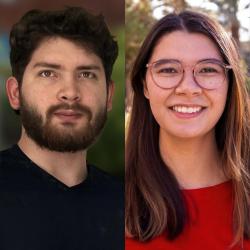
Two hundred miles is a long way to walk for a meeting, but that’s the distance that Syl Foisy, a Ph.D. candidate in Earth and environmental sciences at Columbia University, traveled on foot to meet with University of Maryland Atmospheric and Oceanic Science (AOSC) Professor Ross Salawitch. Foisy started walking 10 days earlier from Central Park in New York City. His destination was the United States Capitol Building in Washington, D.C. In total, it would be a 250-plus-mile journey, taken in the name of climate science.
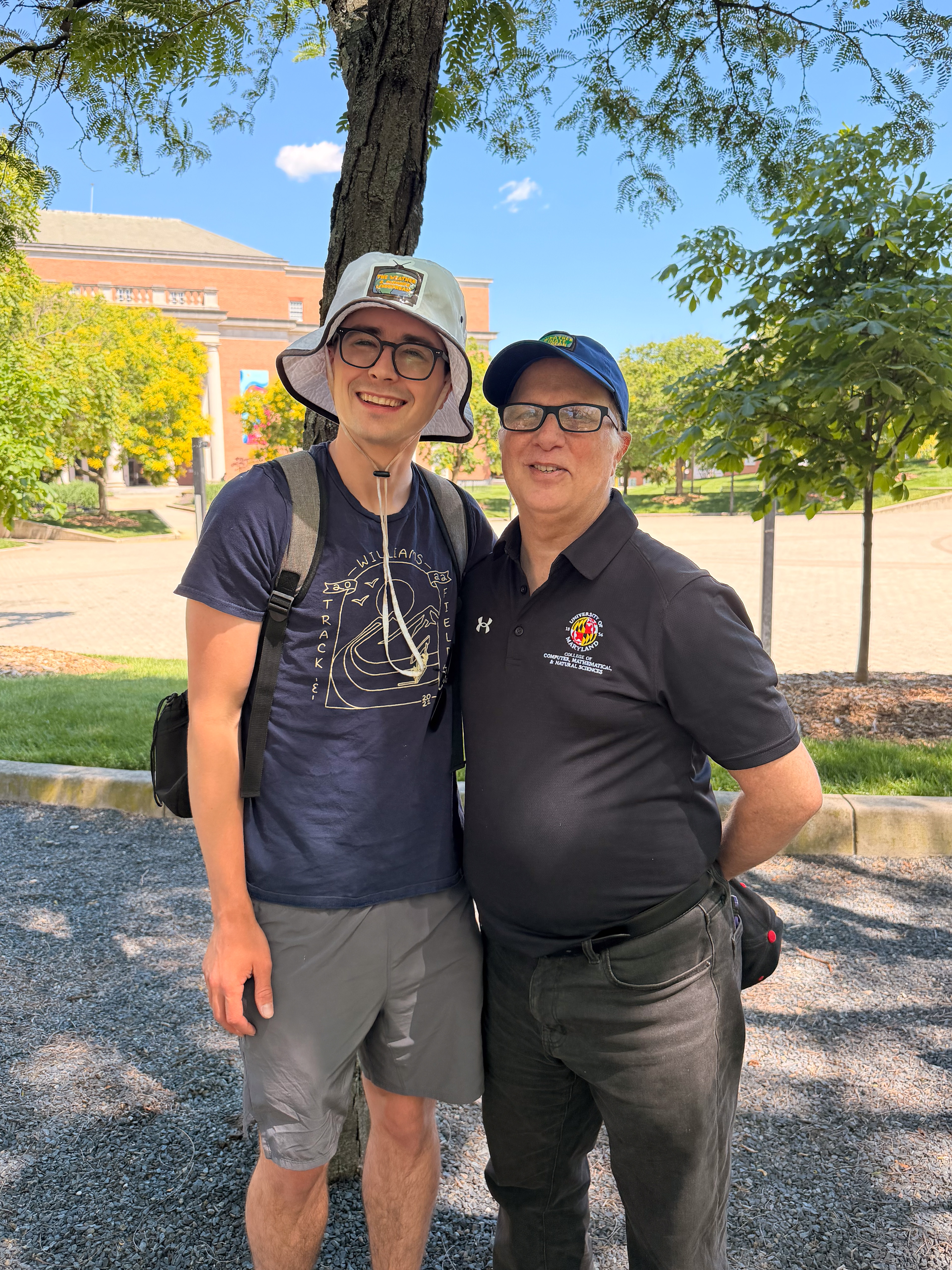
The walk—which was a personal project Foisy organized shortly after passing his Ph.D. qualifying exam—aimed to connect the American public with the climate and weather science community and help people better understand how science-backed weather and climate information keeps all Americans safe and healthy. Along his walk, he interviewed climate and weather scientists, including Salawitch, and he will post the videos on social media to raise awareness of the value of climate- and weather-related research.
“There’s a lack of recognition of how the work that scientists do benefits the people of the nation,” said Salawitch, who also holds joint appointments in the Department of Chemistry and Biochemistry and the Earth System Science Interdisciplinary Center.
Foisy’s walk was part of a larger nonpartisan event, which also included a 50-hour continuous livestream of lectures led by climate and weather scientists. Salawitch gave a lecture on the livestream at 1 a.m., 12 hours before meeting up with Foisy for his recorded interview. He discussed the possibility of meeting the goals of the Paris Climate Agreement and his recent paper identifying the forces that drove record global heat in 2023 and 2024.
Speaking in his personal capacity, Salawitch also discussed the importance of federal funding in supporting this research and other projects across UMD, many of which provide tangible benefits to people living in Maryland and beyond. He pointed to a long history of AOSC research on atmospheric pollution and air quality—including recent research on wildfires—that helped pave the path toward laws that protect air quality.
“At the University of Maryland, we do a huge amount of research on the effect of aerosols on atmospheric composition,” Salawitch said. “Our air has gotten so much cleaner from the efforts that have been put in place, and that has huge economic benefits for the health, welfare and well-being of the citizens of Maryland and throughout the world. Our new challenge is understanding the effect of distant wildfires on local air quality.”
In addition to broadcasting lectures and interviews with Salawitch and other leading researchers, Foisy communicated the importance of science during his ad hoc encounters on the road. Shortly before arriving at UMD, for instance, Foisy passed by a suburban neighborhood and joined a pickup basketball game. When he wasn’t putting up shots, he talked about the goal of his walk and the value of climate- and weather-related research.
“We’ve had a lot of chance interactions with people who otherwise wouldn’t have interacted with the stream,” Foisy said. “There have been a lot of great conversations with folks along the way.”
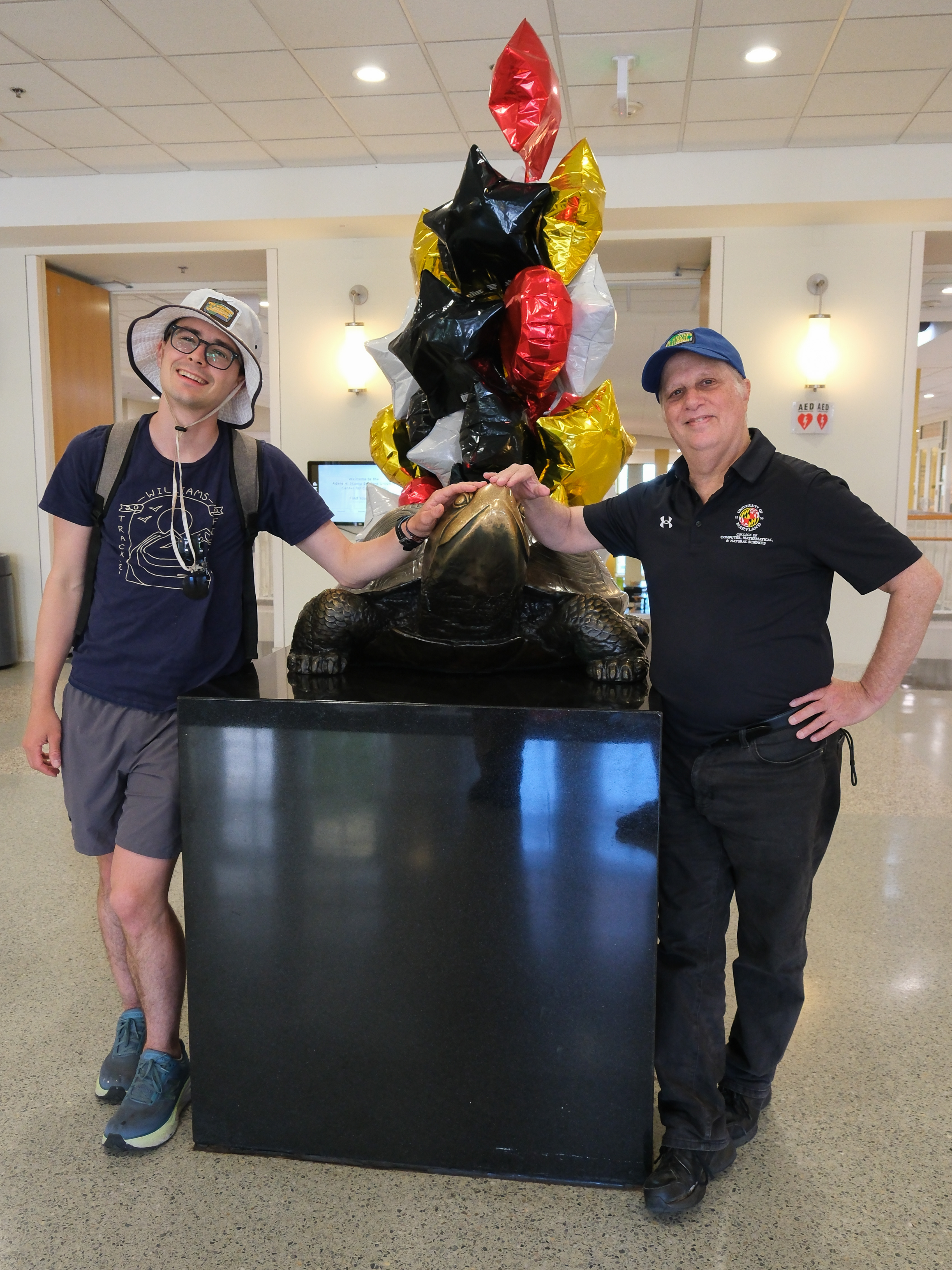
Foisy had a few more opportunities for this sort of connection after leaving College Park. Following his interview with Salawitch—and a brief stroll to see Kermit at the Jim Henson Statue and Memorial Garden and refuel with a scoop of sorbet from the Maryland Dairy—he continued on the path to Washington, D.C. Despite being over 200 miles in, he was still in good spirits. When asked how his legs felt, he smiled and quipped: “What legs?”
Fortunately, Foisy’s trek was almost over. After a stop at Howard University, he concluded his walk at the Capitol Building on June 3, where he held a press conference alongside leaders from science nonprofits and several congressional representatives. The gathering of people and voices there was a physical manifestation of the walk’s mission, Foisy said.
“It’s a collective gesture,” Foisy said. “It brings people together to talk about the work that they’re doing and why it’s critically important.”
###
The opinions expressed in the events described in this article reflect the personal views of Salawitch and Foisy, not necessarily those of their employers or funding sources.