Challenging Social Injustice with Medicine and Law, Senior Chemistry major Mallory Striplin hopes to treat patients facing medical inequities
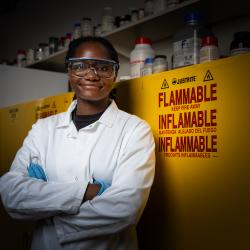
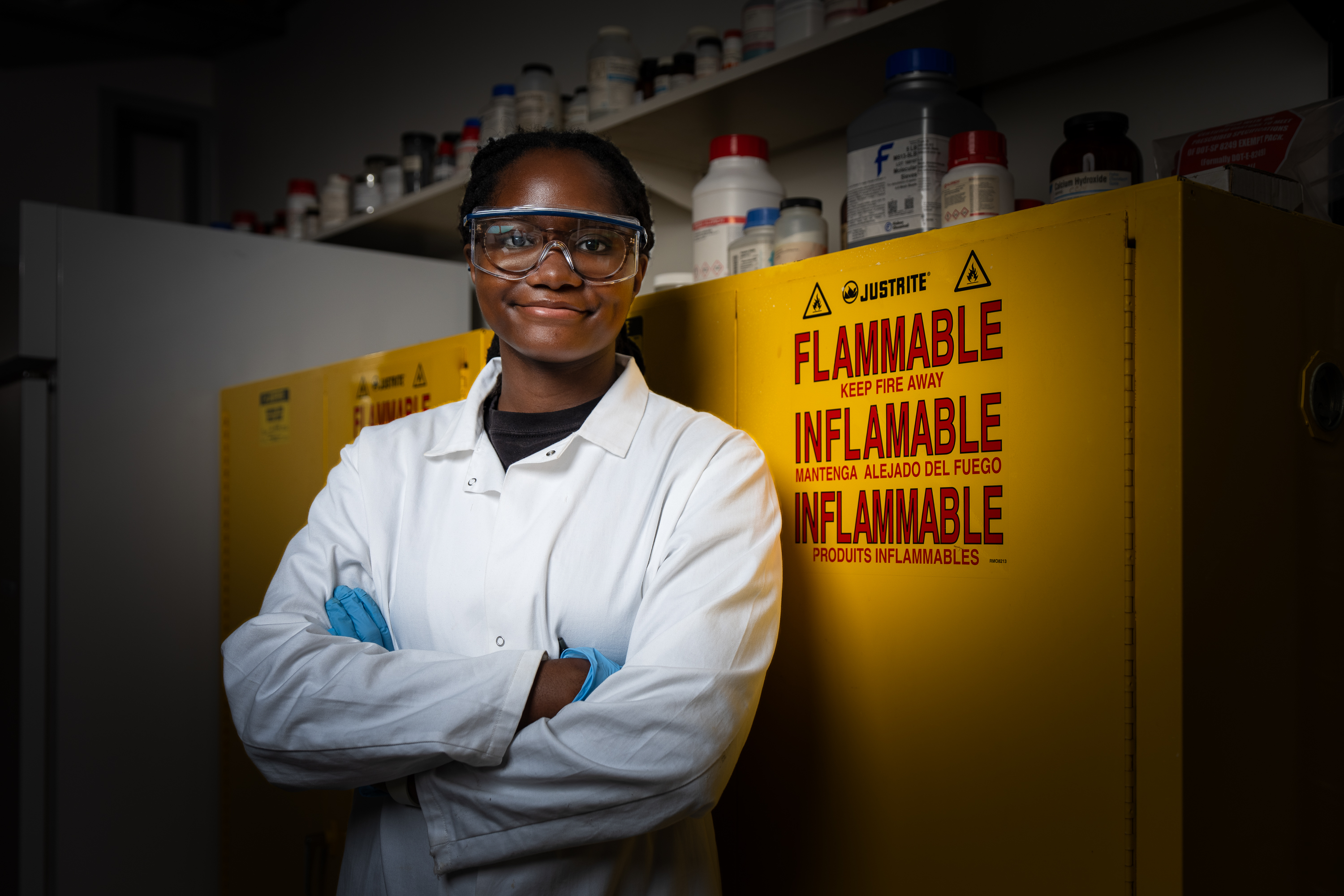
UMD senior chemistry major Mallory Striplin hopes to treat patients facing medical inequities while advocating for them through law and policy.
Mallory Striplin is a modern-day polymath. One minute, you’ll find her in the chemistry lab, synthesizing compounds to be used in chips for cutting-edge nanoscale devices. The next, she’s immersed in a book about Black history, teaching a cycling class, officiating a lacrosse game, running her own tutoring business or serving food to guests at Shepherd’s Table—a nonprofit that provides meals and social services to people experiencing food insecurity, homelessness and poverty.
It’s fitting, then, that the 20-year-old senior chemistry major’s career goal transcends academic disciplines as well. Striplin is a pre-medical and pre-law student at the University of Maryland. She envisions a future career treating patients who suffer from medical maladies that stem from social inequities—such as environmental pollution, housing insecurity and nutrition. She also wants to use the law as a tool to help fix the root causes of these issues.
“My goal is to be a physician and practice with patients,” Striplin said. “I don't necessarily need to be an attorney in the classic sense, where I go to court and represent people. The law is more a vest of knowledge for me to use data that I collect from patient experiences to work with companies and decision-makers to figure out how they can create more sustainable practices.”
Striplin’s career aspirations are rooted in her empathy for people from different backgrounds—a quality she’s had from a young age. The preschool she attended in Plano, Texas, was predominantly Chinese, and in second grade, she began taking Mandarin language classes to better communicate with her childhood friends and their families. Now, she is proficient.
Her goals also build off her aptitudes for science and math. For as long as she can remember, she knew she wanted to be a doctor.
“That might have been brainwashing by my parents,” Striplin said, laughing. “They were like, doctor, lawyer or engineer? And I said, ‘Okay, sure, I’ll be a doctor.’”
As for law, that interest first piqued in middle school and deepened in high school as Striplin learned more about Black history. During her sophomore year of high school, after moving to Bethesda, Maryland, and enrolling at Walter Johnson High School, she began reading about mass incarceration, free prison labor, and the way different environmental and medical issues disproportionately harm Black Americans.
“A major motivator of my path to medicine is my community. I'm African American, and my ancestors were enslaved in the United States,” Striplin said. “What was really important to me was understanding that in some predominantly Black communities, people have a lack of access to quality healthcare, and there are a lot of stereotypes in medicine that aren’t scientific. That’s where the history and law component comes in—with people trying to use pseudoscience to justify unjust practices.”
Striplin could have chosen a variety of majors at UMD to pursue her goals, but she chose chemistry—in part because the coursework was helpful for medical school, but mostly out of pure interest. She particularly enjoys that chemistry can help explain other STEM fields and everyday life, from how hemoglobin works in the human body to the science behind delicious food.
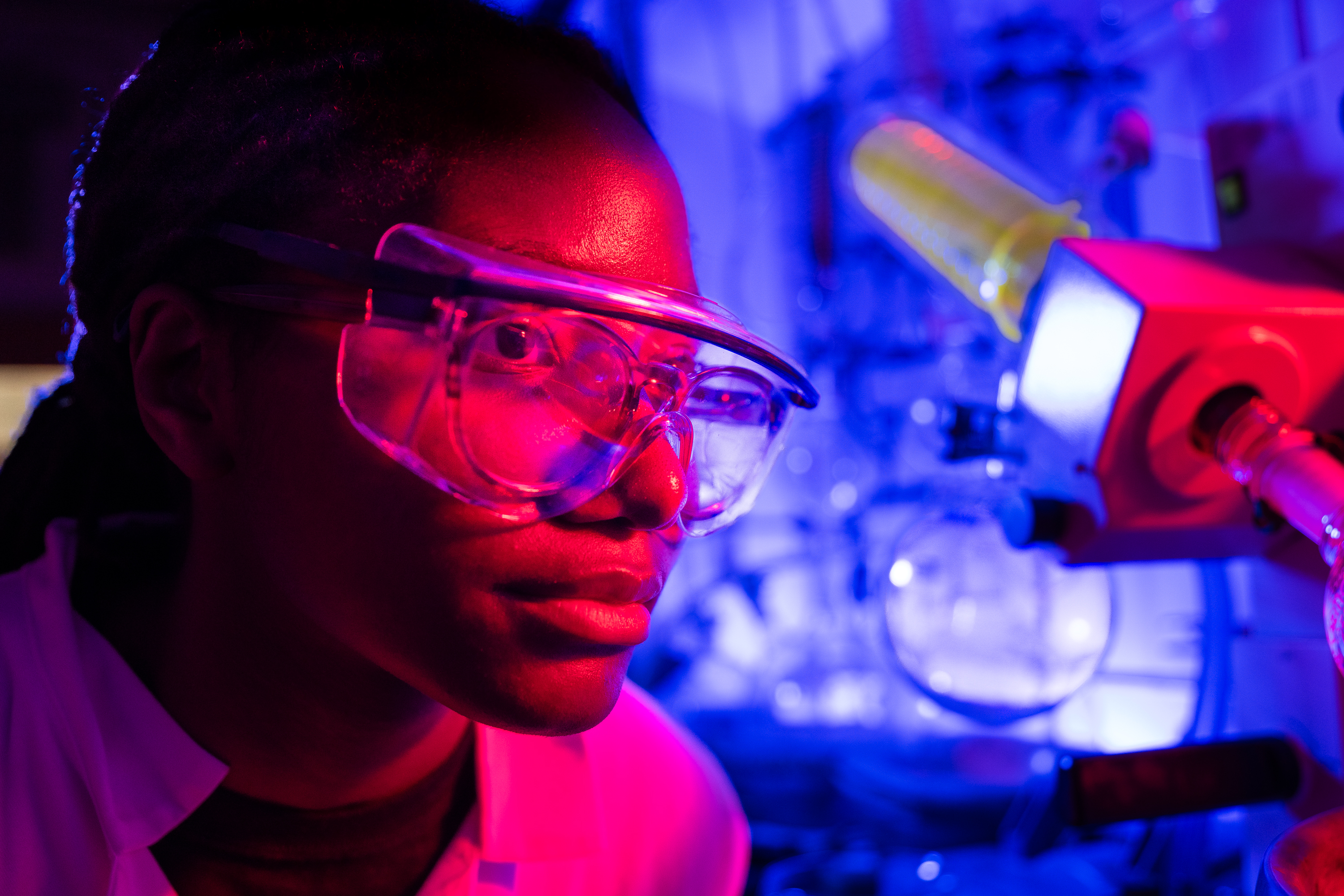
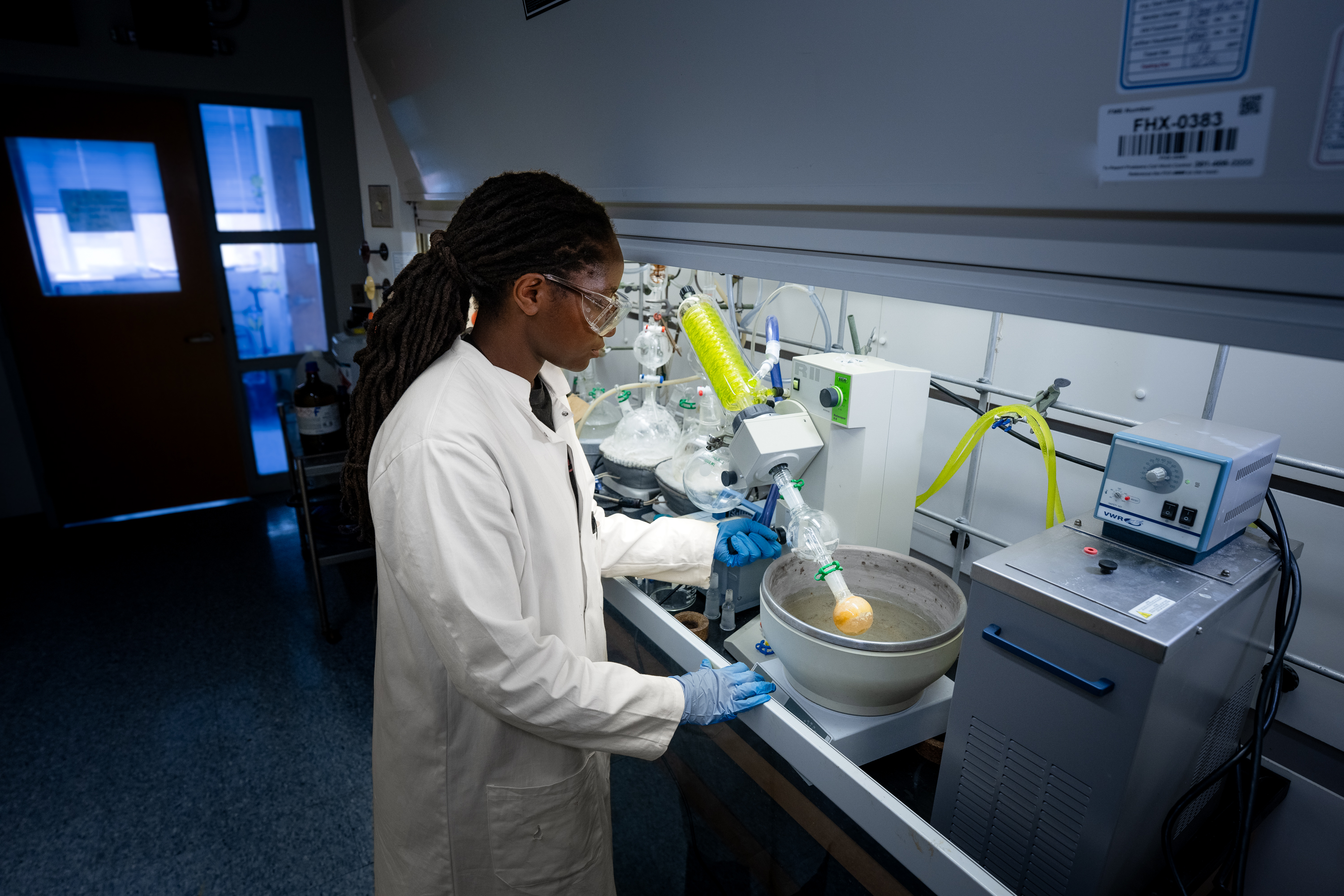
UMD has been a perfect place to pursue her studies, Striplin said. One reason she chose to come to College Park was its reputation as a top research institution, and she wanted lab experience. So, starting last fall, she began conducting research with Chemistry and Biochemistry Chair Daniel Falvey, synthesizing photosensitive compounds for use in nanotechnologies.
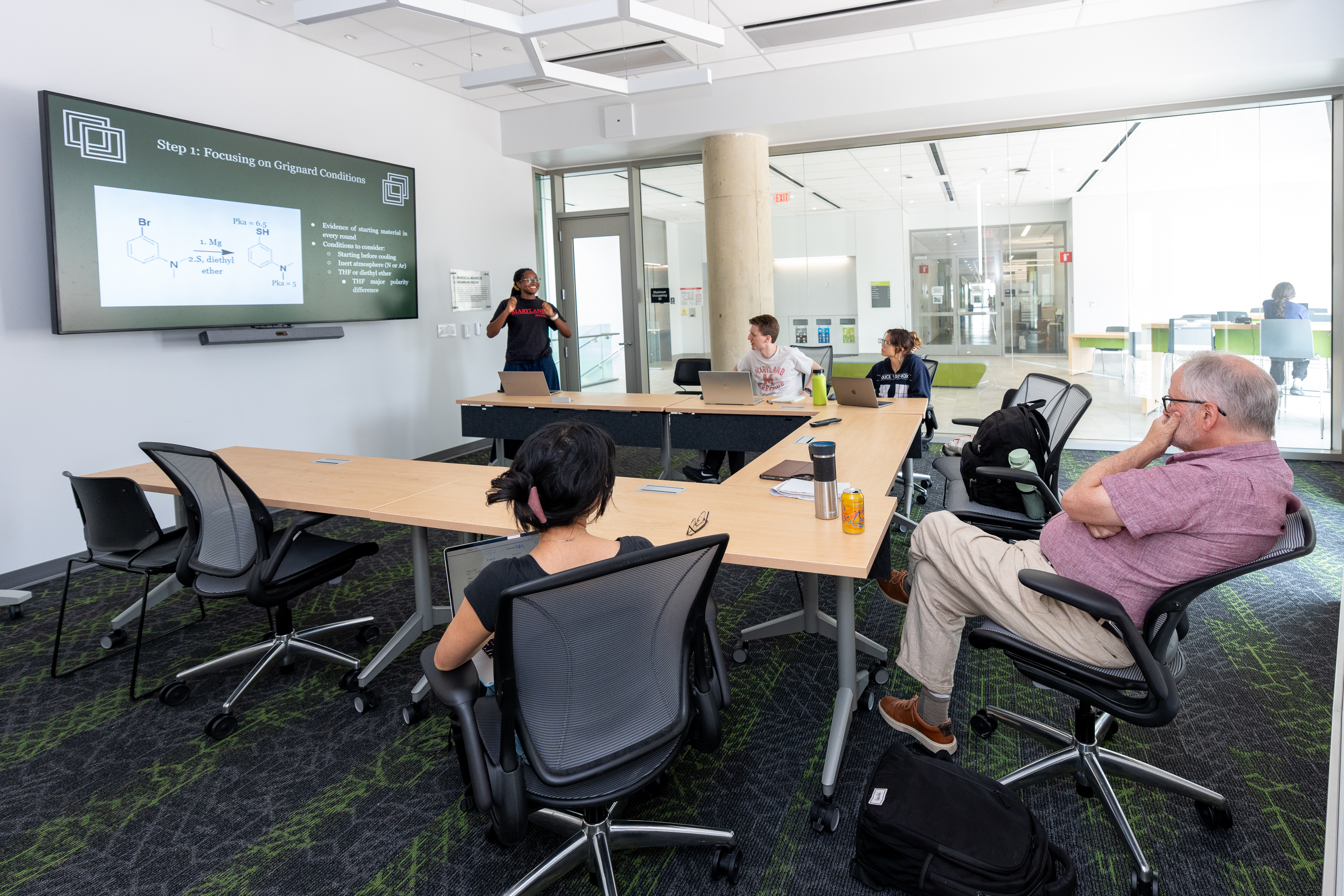
Striplin also pointed to the in-state tuition and the plethora of resources the university provides—from free headshots and advising at the University Career Center to offering scholarships for students to become certified group fitness instructors. Striplin has seized every opportunity, becoming a teaching assistant for CHEM 232: “Organic Chemistry Laboratory I” and earning her cycling instructor certification to teach classes for University Recreation and Wellness.
“Maryland really gives students a lot of support for the tuition they pay,” Striplin said.
After Striplin graduates, she plans to expand her experiences in medicine and social justice during a gap year and a half before medical school. She wants to work in a clinical setting with patients, while also finding time to volunteer, referee lacrosse games, teach group fitness classes and run her tutoring business, MRS Tutoring.
She hopes these opportunities will help her develop the scientific and social skills—and the historical and societal context—for her future career as a physician-lawyer.
“I want to use my skills to advocate for people facing situations that are fundamentally unfair, simply because of their socioeconomic background,” she said. “I want to go into these communities to treat them clinically—and also help heal the roots of the issues at hand.”