Professor Pratyush Tiwary Joins Team to Predict and Intervene in Harmful Protein Changes Before Disease Begins
ARPA-H consortium led by Georgetown and the Buck Institute awarded up to $51.7 million to study misfolding proteins implicated in neurodegenerative diseases and cancer.
A consortium that aims to predict how disease-causing proteins misfold before irreversible damage occurs and use those predictions to develop novel diagnostics and treatments has been awarded up to $51.7 million by the Advanced Research Projects Agency for Health (ARPA-H). The four-year effort is expected to lead to new ways of detecting, slowing and treating neurodegenerative diseases and cancer, with an initial focus on Alzheimer's disease and Ewing sarcoma.

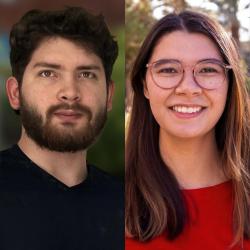
University of Maryland Professor Pratyush Tiwary is a member of the team named SEEDS (Sequence-to-disease: Environment-aware Ensembles of Disordered proteins at Scale) consortium—co-led by Georgetown University’s Priyanka Joshi and the Buck Institute for Research on Aging’s Chuankai (Kai) Zhou—that aims to generate the data needed to train artificial intelligence to recognize the rules governing disease-causing proteins and predict their behavior. Many of these proteins have long been considered "undruggable" because they lack the stable shapes and binding pockets that most drugs are designed to fit.
Tiwary will contribute as a co-principal investigator to INTREPID (INTegRated Environment-aware Prediction Engine for Intrinsically Disordered Protein Pathology), part of the consortium led by Georgetown, which will examine in depth how a protein’s sequence and cellular environment affect the range of shapes it can take and how it behaves. He and colleagues at Georgetown, along with industry partners, will combine high-throughput and high-resolution experimental measurements with computation and artificial intelligence.
“At the heart of INTREPID is a chemistry-first generative AI model that predicts how disordered protein ensembles change across cellular conditions such as pH, crowding, metabolites, oxidative stress and post-translational modifications,” said Tiwary, who holds appointments at the University of Maryland, College Park and the University of Maryland, Baltimore.
The INTREPID team will begin by studying tau and EWS::FLI1—intrinsically disordered proteins implicated in Alzheimer’s disease and Ewing sarcoma, respectively. Unlike many proteins that adopt relatively stable 3D structures, intrinsically disordered proteins form many different shapes. Cellular conditions can influence which forms they take and how they behave. That flexibility allows intrinsically disordered proteins to perform important functions in healthy cells, but it also makes them extraordinarily difficult to understand and target when something goes wrong.
“Can we recognize when a protein is headed in a harmful direction before it gets there, and if so, can we change its course?” Joshi asked. “That question brought this team together.”
The goal is to move from describing these proteins one at a time to predicting their behavior from sequence and surroundings alike, and to turn that prediction into ways to detect, and ultimately prevent, the shifts that lead to disease. Importantly, the team will pair computational predictions with experimental measurements, testing protein behavior under different conditions rather than relying on computer models alone.
“What makes this award especially exciting is that the AI model will be experimentally validated, guide drug discovery, and ultimately help power an inexpensive, accurate approach for the diagnosis and treatment of deadly diseases,” said Tiwary, the Millard and Lee Alexander Professor in Chemical Physics who holds appointments in UMCP’s Department of Chemistry and Biochemistry and Institute for Physical Science and Technology and serves as director of therapeutic drug discovery at the University of Maryland Institute for Health Computing (UM-IHC).
AI tools such as AlphaFold have transformed protein science by learning from decades of accumulated data about protein structures. But researchers don't have the same wealth of structural information for intrinsically disordered proteins, Zhou said, making it much harder to build models that can predict how they behave.
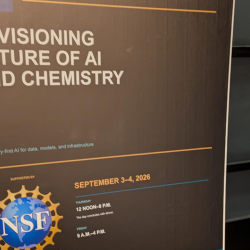
“This work supports my lab’s efforts to thoughtfully and effectively develop new AI approaches specifically for chemistry and not just apply existing AI methods to these problems,” said Tiwary, who recently led a workshop to explore how artificial intelligence could accelerate chemical research and discovery while making it more reliable and reproducible.
Funded by the U.S. National Science Foundation, the two-day workshop focused on creating a shared vision for chemistry-first AI—tools and infrastructure designed around the field’s distinctive data, scientific questions and experimental practices.
Learning the ‘Grammar’ of Protein Behavior
With researchers from 10 academic institutions and seven industry partners, SEEDS is part of ARPA-H’s BIOmolecular Grammar for protein Aggregation Modulation and Intervention (BIOGAMI) program led by Shannon Greene. BIOGAMI focuses on the earliest stages of protein dysfunction, before proteins misfold or clump together and cause lasting damage to cells. The program uses the idea of a molecular “grammar.” If researchers can learn the rules that govern how flexible, disordered proteins behave, they may eventually be able to predict and influence what happens when that behavior begins to change.
SEEDS aims to develop new ways to study these proteins and map their behavior at unprecedented scale.
“We aim to uncover the principles that determine when these proteins remain in healthy functional ensembles and when they begin to shift toward disease-associated states,” Zhou said. “Ultimately, this work could enable us to detect and potentially redirect harmful conformational changes before they lead to irreversible cellular damage.”
Together, INTREPID and SHIFT (Structural Characterization of Intrinsically Disordered Regions at Scale) will generate complementary data to decipher the molecular grammar connecting protein sequence and environment to protein behavior. SHIFT will bring scale to the effort by mapping the different context-dependent shapes that intrinsically disordered regions can take across a broad range of human proteins. Data from both efforts will be integrated to train foundation models designed to predict the context-dependent conformational ensembles of intrinsically disordered regions.
Central to that effort is understanding how a protein’s environment influences its behavior.
Joshi compares the challenge to learning the grammar of a language: researchers need to examine proteins at scale while studying some closely enough to understand how their behavior changes with context. By combining physics-guided AI with experiments that test and refine the model’s predictions, the team hopes to uncover the molecular grammar that connects protein sequence and environment to behavior.
“We want to catch the seed before it grows into disease,” Joshi said.
###
This article was adapted from text provided by Georgetown University.
This research was funded, in part, by the Advanced Research Projects Agency for Health (ARPA-H). The views and conclusions contained in this document are those of the authors and should not be interpreted as representing the official policies, either expressed or implied, of the U.S. Government.