Associate Professor Ling Hao Is Working To Demystify Neurodegenerative Diseases
In the University of Maryland’s Department of Chemistry and Biochemistry, Associate Professor Ling Hao is working to identify molecular changes in the brain that lead to Alzheimer’s disease, Parkinson’s disease and other neurodegenerative disorders affecting millions of people worldwide.
“Unfortunately, there’s no current cure for most brain diseases because we don’t understand the brain enough, especially at the molecular level,” Hao explained.
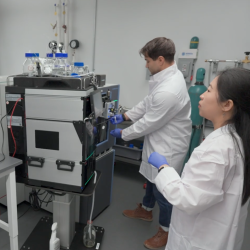
In her cutting-edge stem cell and mass spectrometry research, Hao is developing new analytical chemistry tools to identify the molecular mechanisms underlying neurological diseases.
“My lab combines multiple different tools to study proteins, lipids and metabolites in human neurons and what happens in neurodegeneration,” Hao said. “By comparing disease samples versus control samples, we can identify novel biomarkers that can lead to better diagnostic tools and allow us to design new therapies.”
Hao’s research uses stem cell-derived neurons to model the human brain, essentially creating live human neurons in a dish. By developing mass spectrometry-based methods to measure protein turnover, abundance, and interaction with various biomolecules in neurons, Hao and her team hope to identify and better understand molecular changes in the brain caused by stress and disease. Gaining a better understanding of these molecular changes could point the way to new personalized therapies for neurodegenerative diseases.